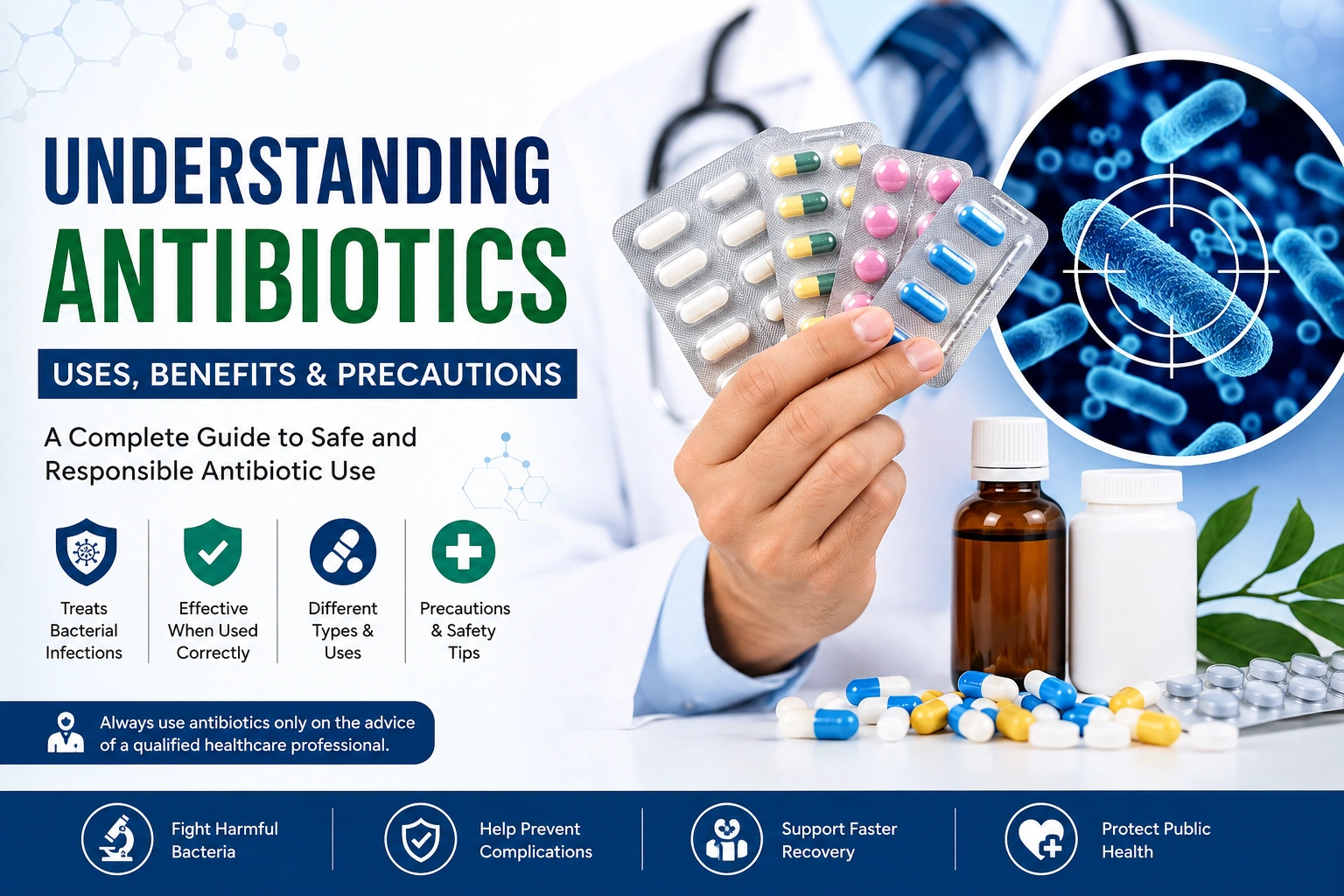
Understanding Antibiotics: Uses, Benefits, Types, and Precautions – A Complete Guide
Introduction
Antibiotics are among the most significant medical discoveries in modern healthcare. Since their introduction, these medicines have transformed the treatment of bacterial infections, helping millions of people recover from illnesses that were once life-threatening. Today, antibiotics continue to play a vital role in hospitals, clinics, and homes around the world.
Despite their importance, antibiotics are often misunderstood. Many people believe they can treat every infection, including the common cold or seasonal flu. Others stop taking antibiotics as soon as they begin to feel better or use leftover medicines without consulting a healthcare professional. These practices can reduce treatment effectiveness and contribute to the growing global challenge of antibiotic resistance.
Understanding how antibiotics work, when they should be used, and the precautions that accompany them is essential for protecting your health and preserving the effectiveness of these medicines for future generations.
In this comprehensive guide, CIBA Labs explains everything you need to know about antibiotics, including their purpose, benefits, different types, common uses, possible side effects, and best practices for safe and responsible use.
What Are Antibiotics?
Antibiotics are medicines designed to treat infections caused by bacteria. They either destroy harmful bacteria or prevent them from multiplying, allowing the body's immune system to eliminate the infection more effectively.
Bacteria are microscopic organisms found throughout the environment. While many bacteria are beneficial and support healthy bodily functions—such as aiding digestion—some can cause illnesses like pneumonia, urinary tract infections, strep throat, and certain skin infections.
Antibiotics specifically target these harmful bacteria without treating illnesses caused by viruses.
Antibiotics are effective for bacterial infections such as:
- Strep throat
- Pneumonia caused by bacteria
- Urinary tract infections (UTIs)
- Certain ear infections
- Skin and soft tissue infections
- Bacterial sinus infections
- Some sexually transmitted bacterial infections
Antibiotics Do Not Treat Viral Infections
One of the most common misconceptions is that antibiotics cure every type of infection.
In reality, antibiotics do not work against viruses.
Examples of viral illnesses include:
- Common cold
- Influenza (flu)
- COVID-19
- Most sore throats caused by viruses
- Viral fever
- Viral bronchitis
Taking antibiotics unnecessarily for viral illnesses offers no benefit and may increase the risk of side effects while contributing to antibiotic resistance.
How Do Antibiotics Work?
Different antibiotics work in different ways depending on the type of bacteria they target.
Some antibiotics:
- Damage the bacterial cell wall.
- Prevent bacteria from producing essential proteins.
- Interfere with bacterial DNA replication.
- Stop bacteria from multiplying.
Because different bacteria respond to different medicines, healthcare professionals prescribe antibiotics based on the likely cause of the infection and, in some cases, laboratory test results.
Common Types of Antibiotics
Healthcare providers choose antibiotics based on the infection, the patient's medical history, allergies, and local resistance patterns.
Some commonly used antibiotic groups include:
Penicillins
Penicillins are among the oldest and most frequently prescribed antibiotics. They are commonly used to treat throat infections, skin infections, and certain respiratory illnesses.
Examples include:
- Amoxicillin
- Ampicillin
Cephalosporins
These antibiotics are widely used in hospitals and clinics to treat a broad range of bacterial infections affecting the lungs, skin, urinary tract, and bloodstream.
Macrolides
Macrolides are often prescribed for patients who cannot take penicillin or for specific respiratory infections.
Examples include:
- Azithromycin
- Clarithromycin
Fluoroquinolones
These antibiotics may be used for certain complicated bacterial infections but are generally prescribed only when appropriate because they can have important safety considerations.
Tetracyclines
Tetracyclines are commonly used for conditions such as acne, some respiratory infections, and certain tick-borne diseases.
Common Conditions Treated with Antibiotics
Antibiotics are prescribed for many bacterial infections, including:
Respiratory Tract Infections
Examples include bacterial pneumonia and some bacterial sinus infections.
Urinary Tract Infections
UTIs are commonly caused by bacteria and often require antibiotics prescribed by a healthcare professional.
Skin Infections
Conditions such as cellulitis and some infected wounds may require antibiotic treatment.
Ear Infections
Some bacterial ear infections, especially in children, may benefit from antibiotics depending on the diagnosis.
Dental Infections
Dentists may prescribe antibiotics for certain bacterial dental abscesses and severe gum infections.
Gastrointestinal Infections
Some bacterial infections affecting the digestive system require antibiotic treatment, while many stomach illnesses caused by viruses do not.
Benefits of Antibiotics
When prescribed appropriately, antibiotics offer several important benefits:
- Help eliminate harmful bacteria.
- Reduce the severity of bacterial infections.
- Shorten recovery time for many illnesses.
- Lower the risk of complications from untreated bacterial infections.
- Help prevent the spread of certain bacterial diseases.
- Support successful recovery after some surgeries and medical procedures when indicated.
However, these benefits depend on using antibiotics only when they are medically necessary and following the prescribed course exactly as directed.
Why Responsible Antibiotic Use Matters
Antibiotics are a valuable medical resource, but they must be used responsibly. Misusing antibiotics—such as taking them without a prescription, skipping doses, or stopping treatment early—can allow bacteria to survive and become harder to treat over time.
This process contributes to antibiotic resistance, a growing global public health concern. Resistant bacteria make infections more difficult to treat and may require stronger or more complex therapies.
Using antibiotics only under the guidance of a qualified healthcare professional helps protect both individual patients and the wider community.
Signs You May Need Antibiotics
Not every infection requires antibiotics. Only a qualified healthcare professional can determine whether an illness is caused by bacteria and whether antibiotic treatment is appropriate.
Some signs that may indicate a bacterial infection include:
- Symptoms lasting longer than expected without improvement
- High fever accompanied by signs of a bacterial infection
- Thick yellow, green, or bloody discharge in certain infections (though color alone does not confirm a bacterial infection)
- Painful urination with frequent urge to urinate
- Red, swollen skin that is warm to the touch and spreading
- Persistent sore throat confirmed as bacterial (such as strep throat)
It is important not to self-diagnose. Many viral infections can produce symptoms similar to bacterial illnesses, and taking antibiotics unnecessarily will not speed recovery.
When Should You Visit a Doctor?
Seek medical advice if you experience:
- Fever lasting more than a few days
- Difficulty breathing
- Severe sore throat with high fever
- Persistent cough lasting several weeks
- Painful or frequent urination
- Severe skin redness or swelling
- Symptoms that worsen instead of improving
- Recurrent infections
Early diagnosis helps ensure you receive the most appropriate treatment while reducing the risk of complications.
Possible Side Effects of Antibiotics
Like all medicines, antibiotics may cause side effects. Most are mild and temporary, but some can be serious.
Common Side Effects
- Nausea
- Vomiting
- Diarrhea
- Mild stomach discomfort
- Loss of appetite
- Headache
- Mild skin rash
- Changes in taste
Many people complete their antibiotic course without significant problems, but any unusual or persistent symptoms should be discussed with a healthcare professional.
Serious Side Effects
Although uncommon, some side effects require immediate medical attention.
Seek urgent medical care if you experience:
- Difficulty breathing
- Swelling of the lips, tongue, or face
- Severe skin rash with blistering
- Persistent severe diarrhea
- Yellowing of the skin or eyes
- Severe dizziness or fainting
These symptoms may indicate a serious allergic reaction or another rare complication.
Allergic Reactions to Antibiotics
Some individuals are allergic to certain antibiotics, particularly penicillin and related medicines.
Symptoms may include:
- Itchy rash
- Hives
- Swelling
- Wheezing
- Difficulty breathing
Anyone with a known antibiotic allergy should always inform their doctor, pharmacist, or healthcare provider before receiving treatment.
Understanding Antibiotic Resistance
One of the biggest challenges facing modern medicine is antibiotic resistance.
Antibiotic resistance occurs when bacteria change over time and become less responsive to medicines that once killed them effectively.
This does not mean the body becomes resistant. Instead, the bacteria themselves evolve, making infections harder to treat.
Causes of Antibiotic Resistance
Several factors contribute to resistance, including:
- Taking antibiotics when they are not needed
- Skipping doses
- Stopping treatment too early
- Using leftover antibiotics
- Sharing antibiotics with others
- Overuse of antibiotics in healthcare and agriculture
Responsible antibiotic use is essential to help preserve their effectiveness for future generations.
How to Take Antibiotics Safely
Following your healthcare provider's instructions is one of the best ways to ensure antibiotics work effectively.
Best Practices
- Take the medicine exactly as prescribed.
- Follow the recommended schedule.
- Complete the full course, even if you start feeling better, unless your healthcare provider advises otherwise.
- Drink enough water unless instructed differently.
- Store medicines according to the label instructions.
- Keep antibiotics out of reach of children.
What You Should Never Do
Avoid these common mistakes:
- Never self-medicate.
- Never use someone else's prescription.
- Never share your antibiotics.
- Never keep leftover antibiotics for future illnesses unless specifically instructed by a healthcare professional.
- Never stop treatment without medical advice.
Antibiotics During Pregnancy
Pregnant women should only take antibiotics under medical supervision.
Some antibiotics are considered appropriate during pregnancy when prescribed by a healthcare professional, while others may not be suitable depending on the stage of pregnancy and the specific medicine.
Always inform your healthcare provider if you are:
- Pregnant
- Planning pregnancy
- Breastfeeding
This allows the most appropriate treatment to be selected.
Antibiotics While Breastfeeding
Certain antibiotics are compatible with breastfeeding, while others may require additional precautions.
A doctor will consider:
- The mother's health
- The baby's age
- The specific medicine
- The severity of the infection
Never start or stop antibiotics during breastfeeding without professional medical advice.
Antibiotics for Children
Children should receive antibiotics only when prescribed by a qualified healthcare professional.
Parents should:
- Use the correct measuring device for liquid medicines.
- Give the exact prescribed dose.
- Follow the recommended schedule.
- Complete the treatment as instructed.
- Never adjust the dose without medical advice.
Parents should also avoid requesting antibiotics for viral illnesses such as the common cold or influenza, as these medicines will not help in such cases.
Drug Interactions
Some antibiotics can interact with other medicines.
Always tell your healthcare provider about:
- Prescription medicines
- Over-the-counter medicines
- Vitamins
- Herbal supplements
- Mineral supplements
This information helps reduce the risk of unwanted interactions.
Food and Antibiotics
Some antibiotics can be affected by certain foods or drinks.
Depending on the specific medicine, your healthcare provider may advise you to:
- Take it with food.
- Take it on an empty stomach.
- Avoid alcohol for certain antibiotics.
- Avoid taking dairy products, calcium supplements, or antacids close to the time of some antibiotic doses, if instructed.
Always follow the directions provided with your prescription.
Can You Drink Alcohol While Taking Antibiotics?
Many antibiotics do not have a significant interaction with alcohol, but drinking alcohol may worsen side effects such as stomach upset or dizziness. Additionally, some antibiotics can interact more seriously with alcohol.
For these reasons, it is generally advisable to limit or avoid alcohol during treatment and follow the guidance provided by your healthcare professional.
How Long Do Antibiotics Take to Work?
Many people begin to feel better within 48 to 72 hours after starting appropriate antibiotic treatment. However, the time can vary depending on:
- The type of infection
- The bacteria causing the infection
- The antibiotic prescribed
- Individual health factors
Even if symptoms improve, continue taking the medicine exactly as prescribed unless your healthcare provider tells you otherwise.
Frequently Asked Questions
Can antibiotics cure the common cold?
No. The common cold is caused by viruses, and antibiotics are only effective against bacterial infections.
Can I stop taking antibiotics when I feel better?
Do not stop taking antibiotics without consulting your healthcare provider. Follow the treatment plan exactly as prescribed.
Can I take leftover antibiotics?
No. Leftover antibiotics may not be the right medicine, dose, or duration for your current illness and should not be used without medical advice.
Why is antibiotic resistance a concern?
Antibiotic resistance makes bacterial infections more difficult to treat and can reduce the effectiveness of medicines that have saved millions of lives.
Can antibiotics prevent infections?
Antibiotics are sometimes used to prevent certain bacterial infections in specific medical situations, such as before some surgeries, but they should only be used when prescribed by a healthcare professional.
6. Can antibiotics treat COVID-19?
No. COVID-19 is caused by a virus, so antibiotics do not treat the infection itself. However, a healthcare professional may prescribe antibiotics if a patient develops a secondary bacterial infection in addition to COVID-19.
7. Why should I complete my prescribed antibiotic course?
Following your healthcare provider's instructions helps ensure the infection is treated effectively. If you have concerns about your medication or experience side effects, consult your healthcare provider before making any changes.
8. Can children take antibiotics?
Yes, but only when prescribed by a qualified healthcare professional. The type of antibiotic, dosage, and duration depend on the child's age, weight, and medical condition.
9. Can antibiotics cause stomach problems?
Some people may experience mild digestive side effects such as nausea, stomach discomfort, or diarrhea. If symptoms are severe or persistent, seek medical advice.
10. What should I do if I miss a dose?
Follow the instructions provided with your prescription or contact your healthcare provider or pharmacist for advice. Do not take a double dose unless specifically instructed.
Common Myths and Facts About Antibiotics
| Myth | Fact |
|---|---|
| Antibiotics cure viral infections. | Antibiotics are effective only against bacterial infections. |
| Stronger antibiotics are always better. | The right antibiotic depends on the type of bacteria and the infection. |
| It's safe to share antibiotics with family members. | Antibiotics should never be shared because treatment must be individualized. |
| Once symptoms improve, treatment can be stopped. | Follow your healthcare provider's instructions regarding the full course of treatment. |
| Every fever requires antibiotics. | Fever can have many causes, including viral infections that do not require antibiotics. |
Tips to Help Prevent Bacterial Infections
Preventing infections reduces the need for antibiotics and supports better overall health.
Wash Your Hands Regularly
Good hand hygiene remains one of the most effective ways to reduce the spread of harmful bacteria.
Keep Vaccinations Up to Date
Vaccines help protect against several serious bacterial and viral diseases.
Practice Safe Food Handling
- Wash fruits and vegetables thoroughly.
- Cook meat properly.
- Store food at safe temperatures.
- Avoid cross-contamination between raw and cooked foods.
Maintain Good Personal Hygiene
Daily hygiene practices, including bathing and proper oral care, help reduce the risk of infections.
Treat Wounds Promptly
Clean cuts and scratches with clean water and keep them covered to reduce the risk of bacterial infection.
Maintain a Healthy Lifestyle
Supporting your immune system can help your body fight infections more effectively.
Healthy habits include:
- Eating a balanced diet
- Drinking enough water
- Exercising regularly
- Getting sufficient sleep
- Managing stress
- Avoiding tobacco use
The Importance of Quality Pharmaceutical Manufacturing
The effectiveness and safety of antibiotics depend not only on proper prescribing but also on high-quality manufacturing standards.
Reputable pharmaceutical manufacturers follow strict quality control procedures to help ensure medicines meet regulatory requirements for:
- Quality
- Safety
- Purity
- Stability
- Consistency
Healthcare providers and patients should always obtain medicines from licensed pharmacies and trusted manufacturers.
Why Patient Education Matters
Patient education is an essential part of responsible healthcare.
When people understand:
- When antibiotics are appropriate,
- How to take them correctly,
- Why unnecessary use should be avoided,
they are better equipped to make informed decisions and support the responsible use of these important medicines.
Educational resources from healthcare professionals and trusted pharmaceutical organizations play an important role in promoting safe medicine use.
Why Choose CIBA Labs?
At CIBA Labs, we are committed to supporting better healthcare through quality-focused pharmaceutical products and educational resources.
Our commitment includes:
- Quality-driven pharmaceutical manufacturing
- Patient-focused healthcare information
- Reliable quality assurance practices
- Compliance with applicable industry standards
- Continuous focus on innovation and product quality
We believe that informed patients and healthcare professionals contribute to healthier communities.
Conclusion
Antibiotics remain one of the most valuable tools in modern medicine for treating bacterial infections. When used responsibly and under the guidance of qualified healthcare professionals, they help reduce illness, prevent complications, and improve recovery.
At the same time, unnecessary or inappropriate antibiotic use can contribute to antibiotic resistance, making infections more difficult to treat in the future. Understanding when antibiotics are needed—and when they are not—is an important part of protecting both individual and public health.
Always take antibiotics exactly as prescribed, avoid self-medication, and seek medical advice if you have questions about your treatment. Responsible use helps preserve the effectiveness of these medicines for future generations.
Call to Action
Looking for trusted pharmaceutical products backed by a commitment to quality?
Explore the healthcare solutions offered by CIBA Labs and learn more about our dedication to supporting patients and healthcare professionals through reliable pharmaceutical products and educational resources.
Visit our Products page to discover our range of healthcare solutions, or contact our team for more information.