Introduction
Antibiotics are among the most important medicines used to treat bacterial infections. They can save lives when used appropriately, but they are not effective against viral infections such as the common cold and influenza. Using antibiotics only when they are needed helps protect patients from unnecessary side effects and helps slow antibiotic resistance.
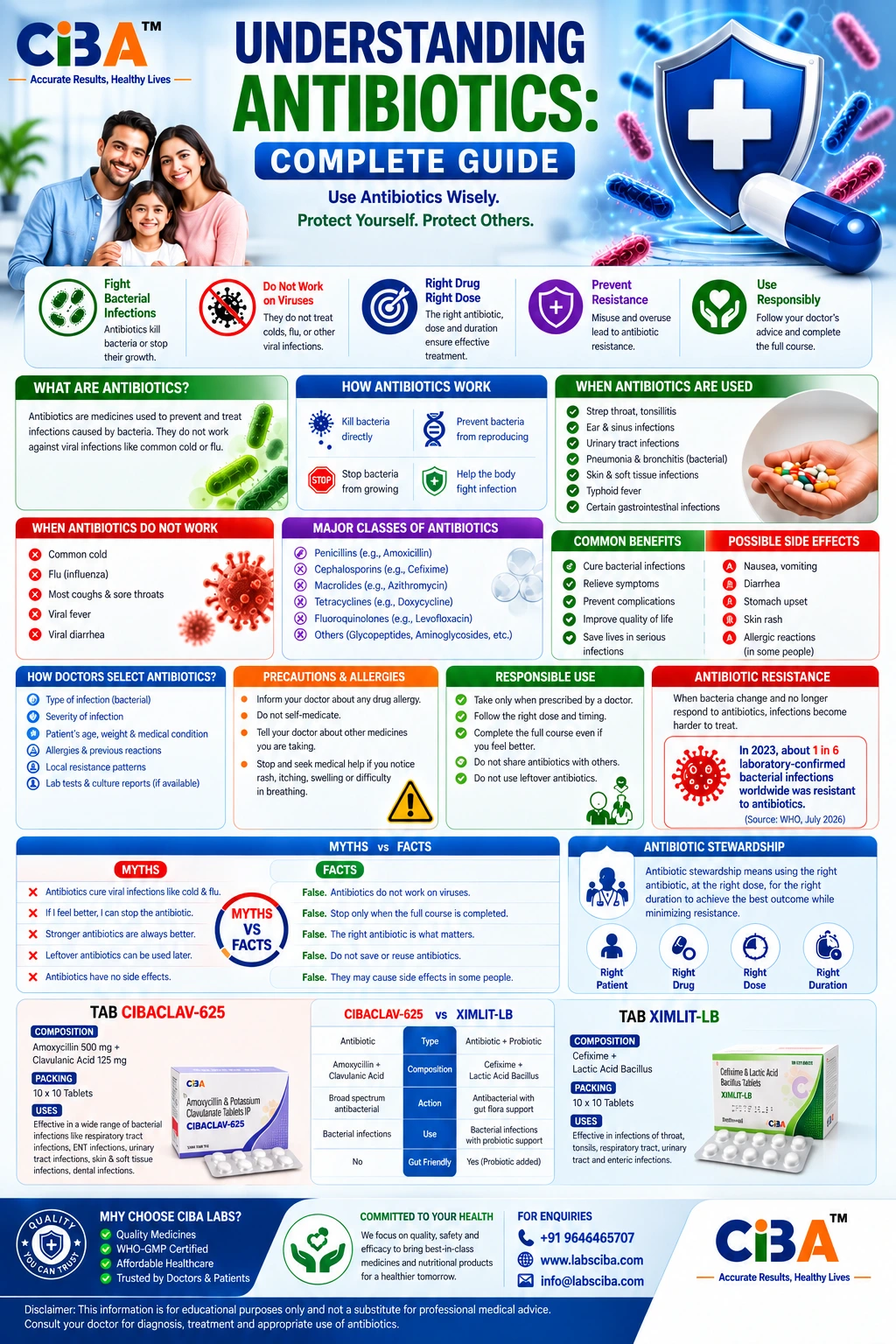
This complete guide explains what antibiotics are, how they work, when they may be prescribed, the difference between antibiotics and medicines for viral infections, common precautions, side effects, antibiotic resistance, and responsible antibiotic use. It also explains selected antibiotic products in the CIBA Labs portfolio.
What Are Antibiotics?
Antibiotics are medicines that act against bacteria. Depending on the medicine, they may kill susceptible bacteria or stop their growth and multiplication. They are used to treat certain bacterial infections and are not medicines for viral infections. citeturn0search2turn0search9
Antibiotics are different from other anti-infective medicines. Antivirals are used against certain viruses, antifungals against fungal infections, and antiparasitic medicines against parasites.
When Are Antibiotics Used?
Antibiotics may be prescribed when a healthcare professional determines that a bacterial infection is present or strongly suspected and that antibiotic treatment is appropriate.
Examples of bacterial infections that may require antibiotics include certain cases of:
Strep throat.
Whooping cough.
Urinary tract infections.
Certain skin and soft-tissue infections.
Certain bacterial respiratory infections.
Other bacterial infections where treatment is clinically indicated.
Not every bacterial infection requires an antibiotic, and the appropriate choice depends on the infection, the suspected or confirmed organism, the patient's circumstances and current clinical guidance.
When Antibiotics Do NOT Work
Antibiotics do not treat viral infections. Common viral illnesses include many colds, influenza and many cases of acute bronchitis. Taking an antibiotic for a viral illness does not make the virus disappear and can expose the patient to unnecessary adverse effects and contribute to resistance.
Symptoms alone cannot always tell whether an infection is bacterial or viral. A healthcare professional may need to assess symptoms, examination findings and, when appropriate, diagnostic tests.
How Do Antibiotics Work?
Different antibiotics act on bacteria in different ways. Some interfere with bacterial cell-wall formation, some affect bacterial protein production, and others interfere with bacterial DNA or other essential processes.
Because antibiotics target bacterial processes, they cannot treat viruses. Different bacterial infections may also require different antibiotics, which is why choosing an antibiotic should be based on professional clinical assessment rather than self-medication.
Major Antibiotic Groups
Antibiotics belong to different drug classes. Examples include:
Penicillin and penicillin-related antibiotics.
Cephalosporins.
Macrolides.
Tetracyclines.
Fluoroquinolones.
Aminoglycosides.
Other antibiotic classes used for specific infections.
The class of an antibiotic does not by itself determine whether it is appropriate for a particular patient. Selection depends on the infection, susceptibility, allergies, interactions, local resistance patterns and other clinical factors.
How Doctors Choose an Antibiotic
The likely or confirmed cause of the infection.
The site and severity of the infection.
Whether laboratory testing or culture results are available.
Known or suspected antibiotic susceptibility.
Previous allergy or serious reaction to medicines.
Age, pregnancy status and other patient-specific factors.
Kidney or liver function when relevant.
Other medicines and possible drug interactions.
Local antibiotic resistance patterns and current treatment guidance.
Benefits of Appropriate Antibiotic Use
Can treat susceptible bacterial infections.
Can prevent complications from certain bacterial infections.
Can reduce the duration or severity of some bacterial illnesses when appropriately prescribed.
Can prevent transmission or complications in selected infections.
Can be life-saving in serious bacterial infections.
The benefit of an antibiotic depends on using the right medicine for the right clinical situation. Antibiotics should not be considered a general treatment for fever, cough or every infection-like symptom.
Common Side Effects of Antibiotics
Antibiotics can cause side effects even when they are appropriately prescribed. Common side effects can include:
Nausea.
Diarrhea.
Stomach discomfort.
Dizziness.
Skin rash.
Yeast infections.
More serious reactions can occur with some antibiotics, including severe allergic reactions and C. difficile infection associated with antibiotic use. Contact a healthcare professional if significant or concerning symptoms occur.
Antibiotic Allergies and Precautions
Before taking an antibiotic, tell your healthcare professional about any previous allergy or serious reaction to antibiotics. This is particularly important when the prescribed medicine belongs to a related antibiotic class.
Also tell the healthcare professional about other prescription medicines, over-the-counter medicines, supplements and relevant medical conditions. Some antibiotics interact with other medicines or require dose adjustments in particular circumstances.
How to Take Antibiotics Responsibly
Use antibiotics only when prescribed or recommended by a qualified healthcare professional.
Take the medicine exactly according to the prescription and current product information.
Do not share antibiotics with another person.
Do not take antibiotics prescribed for someone else.
Do not keep leftover antibiotics for a future illness.
Do not change the dose or schedule on your own.
Ask a healthcare professional or pharmacist if you have questions about how to take the medicine.
Dispose of unused or expired medicines safely according to local guidance.
CDC specifically advises patients not to save antibiotics for later or take antibiotics prescribed for another person.
Antibiotics and Antibiotic Resistance
Antibiotic resistance occurs when bacteria develop the ability to survive antibiotics that previously worked against them. The resistance is in the bacteria; it does not mean that a person's body becomes resistant to antibiotics.
Misuse and overuse of antibiotics are major drivers of resistance. Resistance can make infections harder or sometimes impossible to treat and can narrow available treatment options. WHO reported that approximately one in six laboratory-confirmed bacterial infections worldwide was resistant to antibiotic treatment in 2023.
How Does Antibiotic Resistance Develop?
Bacteria can acquire or develop resistance mechanisms over time. Antibiotic exposure can favor bacteria that survive treatment, allowing resistant bacteria to multiply and spread. Resistance traits can also move between microorganisms.
Resistant organisms can spread through healthcare facilities, communities, food systems and the environment. Good hygiene, vaccination, infection prevention and responsible antibiotic use can help reduce the spread.
How Can We Help Prevent Antibiotic Resistance?
Use antibiotics only when they are clinically appropriate.
Never use antibiotics for viral illnesses unless a bacterial infection also requires treatment.
Follow professional instructions for prescribed antibiotics.
Do not share or reuse antibiotics.
Maintain good hand hygiene.
Follow recommended vaccination schedules.
Practice safe food preparation and hygiene.
Stay home when sick when appropriate and avoid spreading infections.
Support appropriate infection prevention and control.
CIBA Labs Antibiotic Portfolio
The CIBA Labs product list supplied for this blog series includes two products specifically identified as antibiotics:
TAB CIBACLAV-625
Composition: Amoxycillin 500 mg + Clavulanic Acid 125 mg
Pack Size: 10 x 10
CIBACLAV-625 combines amoxycillin with clavulanic acid. Amoxycillin is a penicillin-type antibacterial medicine, while clavulanic acid is a beta-lactamase inhibitor. The combination is used for selected bacterial infections when a healthcare professional considers it appropriate.
Important precautions:
• Tell the healthcare professional about any previous serious allergy to penicillins, cephalosporins or related beta-lactam antibiotics.
• Inform the prescriber about other medicines being taken.
• Use according to the current approved product information and prescription.
• Seek urgent medical attention for signs of a severe allergic reaction.
• Contact a healthcare professional for severe or persistent diarrhea during or after antibiotic treatment.
TAB XIMLIT-LB
Composition: Cefixime + Lactic Acid Bacillus
Pack Size: 10 x 10
XIMLIT-LB contains cefixime, a cephalosporin antibacterial medicine, together with lactic acid bacillus. Cefixime may be used for selected bacterial infections caused by susceptible organisms when a healthcare professional determines that treatment is appropriate.
Important precautions:
• Tell the healthcare professional about previous allergy to cefixime, cephalosporins, penicillins or related medicines.
• Inform the prescriber about other medicines and relevant medical conditions.
• Use only according to professional advice and current approved product information.
• Do not use it simply because symptoms resemble a previous infection.
CIBACLAV-625 vs XIMLIT-LB
Both products are antibiotics, but they contain different antibacterial medicines.
CIBACLAV-625 contains amoxycillin + clavulanic acid, while XIMLIT-LB contains cefixime + lactic acid bacillus. One should not be described as universally stronger or better than the other. The appropriate antibiotic depends on the infection, the suspected organism, susceptibility, patient factors and professional treatment guidance.
This distinction is important for responsible pharmaceutical communication and for avoiding self-medication.
Why Antibiotic Selection Matters
Using an inappropriate antibiotic may fail to treat the infection, expose the patient to unnecessary adverse effects and contribute to antimicrobial resistance. The most appropriate antibiotic is the one that is clinically indicated for the infection and suitable for the individual patient.
Healthcare professionals may use clinical assessment, laboratory testing and susceptibility information when available to guide antibiotic selection.
Antibiotic Stewardship
Antibiotic stewardship means using antibiotics appropriately so that patients receive effective treatment when they need it while minimizing unnecessary exposure, adverse effects and resistance.
Stewardship involves selecting an appropriate antibiotic, dose, route and duration based on the clinical situation and current professional guidance. It also means avoiding antibiotics when they are not indicated.
Myths and Facts About Antibiotics
Myth: Antibiotics cure colds and flu.
Fact: Colds and flu are viral illnesses, so antibiotics do not treat the viruses that cause them.
Myth: A stronger antibiotic is always better.
Fact: The appropriate antibiotic depends on the infection and patient. A broader or different antibiotic is not automatically better.
Myth: Antibiotics are harmless.
Fact: Antibiotics can cause side effects and can contribute to resistance.
Myth: I can use leftover antibiotics for my next illness.
Fact: Do not save antibiotics for later. A future illness may have a different cause and require a different treatment.
Myth: Antibiotic resistance means my body is resistant.
Fact: Resistance occurs in the bacteria or other microorganisms, not in the person's body.
What are antibiotics?
Antibiotics are medicines used to treat certain bacterial infections. They do not treat viral infections.
Do antibiotics work for viral infections?
No. Antibiotics do not treat viruses such as those causing colds and flu.
Can I take antibiotics without a prescription?
Antibiotic use should be guided by a qualified healthcare professional and current local regulations and product requirements.
Can antibiotics cause side effects?
Yes. Common effects include nausea, diarrhea, dizziness and rash; serious reactions can also occur.
What is antibiotic resistance?
It is when bacteria develop the ability to survive antibiotics that were previously effective against them.
How can I prevent antibiotic resistance?
Use antibiotics only when appropriate, follow professional instructions, avoid sharing or reusing antibiotics, and practice infection-prevention measures.
What is CIBACLAV-625?
CIBACLAV-625 contains Amoxycillin 500 mg + Clavulanic Acid 125 mg and is supplied in a 10 x 10 pack according to the product information provided for this blog series.
What is XIMLIT-LB?
XIMLIT-LB contains Cefixime + Lactic Acid Bacillus and is supplied in a 10 x 10 pack according to the product information provided for this blog series.
Which is better, CIBACLAV-625 or XIMLIT-LB?
Neither is universally better. Antibiotic choice depends on the infection, susceptibility, patient factors and professional clinical guidance.
Why Choose CIBA Labs?
CIBA Labs has a diverse pharmaceutical portfolio that includes anti-infective products as well as medicines from other therapeutic categories. Its antibiotic portfolio supplied for this article includes CIBACLAV-625 and XIMLIT-LB.
Responsible antibiotic communication is important because preserving antibiotic effectiveness requires appropriate prescribing, appropriate use and continued awareness about antimicrobial resistance.
Conclusion
Antibiotics are powerful medicines that can save lives when they are used appropriately for bacterial infections. They do not treat viral infections, and unnecessary use can expose people to side effects and contribute to antibiotic resistance.
The safest approach is simple: use antibiotics only when clinically appropriate, follow professional instructions, never share or reuse antibiotics, and seek medical advice when you are unsure whether an infection needs antibiotic treatment.
CIBA Labs includes TAB CIBACLAV-625 and TAB XIMLIT-LB in the supplied antibiotic portfolio. These products should be used only according to their current approved product information and qualified healthcare professional guidance.
Call to Action
Explore the CIBA Labs product portfolio to learn more about our pharmaceutical products.
For product-specific information or business enquiries, visit the relevant CIBA Labs product page or contact the CIBA Labs team.
Medical and Product Information Disclaimer: This article is intended for general educational and product-information purposes only. It is not a substitute for medical advice, diagnosis, prescribing information or treatment. Product composition and pack information are based on the CIBA Labs product details supplied for this blog series. Always refer to the current approved product information and consult a qualified healthcare professional before using any medicine.
Reference Sources
WHO – Antimicrobial Resistance fact sheet, updated 16 July 2026.
CDC – Healthy Habits: Antibiotic Do's and Don'ts, September 23, 2025.
CDC – Antibiotic Use and Antimicrobial Resistance Facts.
FDA – Antibiotics and Antibiotic Resistance.
These sources support the general information about antibiotic use, viral versus bacterial infections, side effects, stewardship and antimicrobial resistance. Product-specific descriptions and pack information are based on the CIBA Labs product details supplied for this blog series.