Introduction
Antibiotics are important medicines used to treat certain bacterial infections. When bacteria develop the ability to survive antibiotics that once worked against them, this is called antibiotic resistance.
Antibiotic resistance is part of the wider problem of antimicrobial resistance (AMR). WHO identifies AMR as a major global health threat because resistant infections can become harder to treat and can increase the risk of severe illness and death. WHO reported that approximately one in six laboratory-confirmed bacterial infections globally was resistant to antibiotic treatment in 2023. citeturn0search0turn0search9
This CIBA Labs guide explains antibiotic resistance, why it happens, how it spreads, how it can be prevented, and how responsible antibiotic use helps preserve effective treatments.
What Is Antibiotic Resistance?
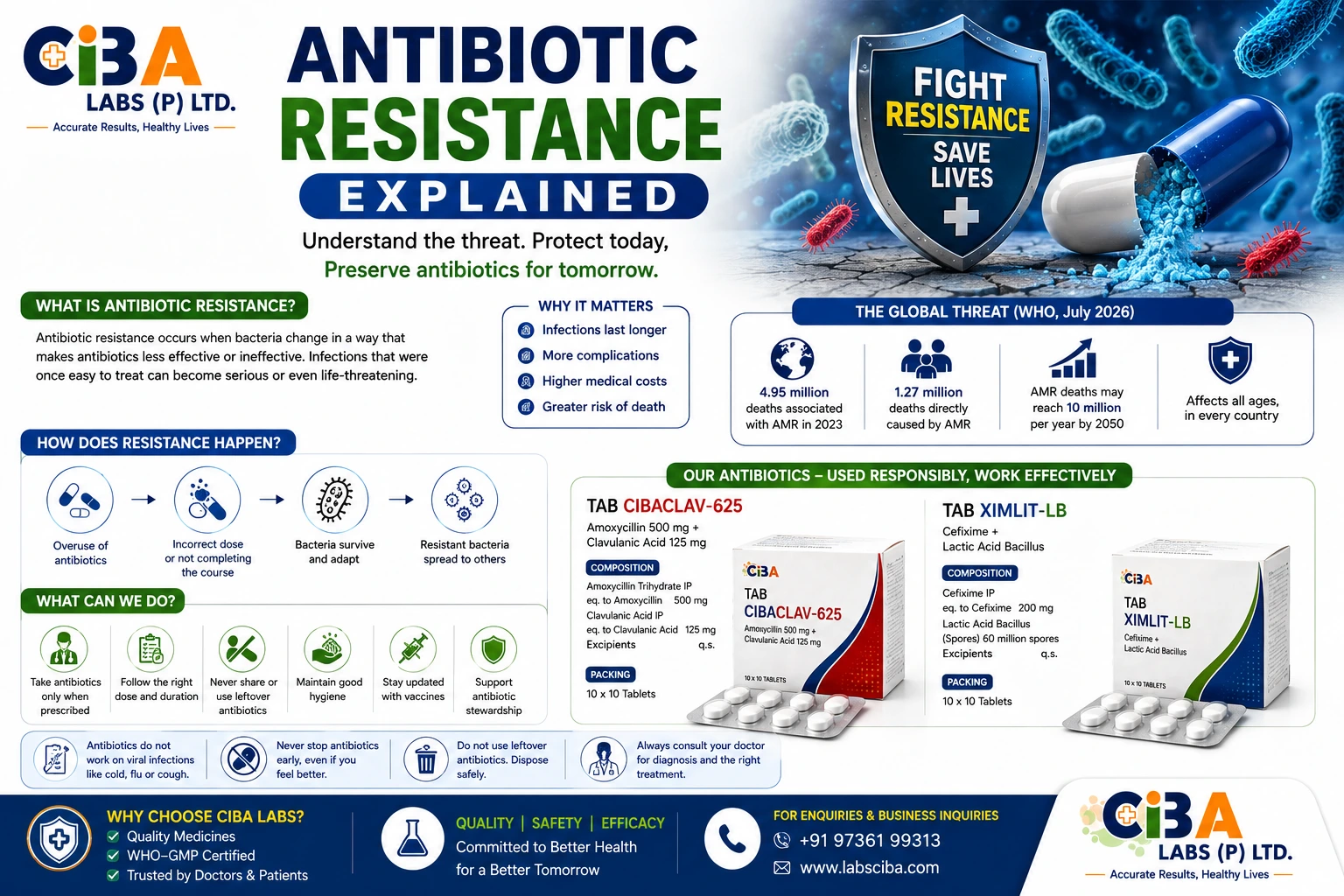
Antibiotic resistance occurs when bacteria change over time and become less responsive or unresponsive to antibiotics. The bacteria—not the person—become resistant. When an antibiotic is no longer effective, an infection may persist and treatment options may become narrower. citeturn0search0turn0search1
How Does Antibiotic Resistance Develop?
Resistance can occur naturally as bacteria evolve. Antibiotic exposure can favor bacteria that have resistance mechanisms, allowing them to survive while susceptible bacteria are eliminated. Inappropriate antibiotic use can accelerate this process. WHO identifies misuse and overuse of antimicrobials as major drivers of resistance. citeturn0search0turn0search3
Common Factors That Increase Resistance
Taking antibiotics when they are not needed.
Using an antibiotic that is not appropriate for the infection.
Using antibiotics for viral illnesses such as common colds and influenza.
Using medicines without appropriate professional guidance.
Sharing antibiotics with another person.
Using leftover antibiotics for a new illness.
Poor infection prevention and control.
Inadequate hygiene and sanitation.
Limited access to appropriate diagnostics and quality-assured medicines.
Inappropriate antimicrobial use in humans, animals, and agriculture.
Why Is Antibiotic Resistance a Serious Problem?
When bacteria become resistant, infections that were previously easier to treat may require alternative medicines, longer treatment, additional diagnostic testing, or hospital care. Resistance can increase healthcare costs and can make procedures such as surgery, cancer chemotherapy, and organ transplantation riskier when effective infection-control options are limited. citeturn0search4turn0search24
Antibiotic Resistance Does Not Mean Antibiotics Have Failed
Antibiotics remain valuable medicines. Resistance means that some bacteria are no longer susceptible to particular antibiotics. Healthcare professionals can select treatment based on the infection, likely or confirmed bacteria, susceptibility information when available, patient factors, and current treatment guidance. The goal of antibiotic stewardship is to use antibiotics appropriately when they are genuinely needed.
Antibiotics and Viral Infections
Antibiotics act against bacteria and do not treat viral illnesses such as common colds and influenza. Taking an antibiotic for a viral infection does not make the virus disappear and can expose the person to side effects and unnecessary antibiotic exposure.
How Can Resistant Bacteria Spread?
Resistant bacteria can spread between people and through healthcare environments, food systems, animals, and the environment. Poor infection prevention and control can make transmission easier. Good hygiene, vaccination where appropriate, safe food and water practices, and responsible antimicrobial use can help reduce the spread. citeturn0search3turn0search4
How Can We Prevent Antibiotic Resistance?
Use antibiotics only when prescribed or recommended by a qualified healthcare professional.
Do not use antibiotics for viral illnesses unless a bacterial infection also requires treatment.
Take the medicine exactly as instructed.
Do not share antibiotics.
Do not use leftover antibiotics for a future illness.
Tell your doctor about previous medicine allergies and reactions.
Tell your healthcare professional about other medicines you take.
Practice good hand hygiene and other infection-prevention measures.
Follow recommended vaccination guidance.
Seek medical advice if an infection worsens or does not improve as expected.
What Is Antibiotic Stewardship?
Antibiotic stewardship means using antibiotics in a way that provides appropriate treatment when needed while minimizing unnecessary exposure, adverse effects, and resistance. It includes choosing an appropriate antibiotic, dose, and duration according to professional guidance and avoiding antibiotics when they are not clinically indicated. WHO's current AMR strategy emphasizes awareness, surveillance, infection prevention, appropriate access and use, research, and coordinated action. citeturn0search0
CIBA Labs Antibiotic Products
CIBA Labs includes antibiotic products in its pharmaceutical portfolio. Two products relevant to this antibiotic-awareness series are TAB CIBACLAV-625 and TAB XIMLIT-LB. The descriptions below use the product details supplied for the CIBA Labs blog series and are for educational/product-information purposes, not self-medication.
TAB CIBACLAV-625
Composition: Amoxycillin 500 mg + Clavulanic Acid 125 mg
Pack Size: 10 x 10
CIBACLAV-625 combines amoxycillin, a penicillin-type antibacterial medicine, with clavulanic acid, a beta-lactamase inhibitor. The combination may be prescribed for selected bacterial infections when a qualified healthcare professional considers it clinically appropriate.
Precautions: Inform the healthcare professional about previous serious allergies to penicillins, cephalosporins, or related beta-lactam medicines. Tell the prescriber about other medicines being taken. Use only according to current approved product information and the prescription. Seek medical attention for severe allergic symptoms or significant/persistent diarrhea.
TAB XIMLIT-LB
Composition: Cefixime + Lactic Acid Bacillus
Pack Size: 10 x 10
XIMLIT-LB contains cefixime, a cephalosporin antibacterial medicine, together with lactic acid bacillus. Cefixime may be used for selected bacterial infections caused by susceptible organisms when a healthcare professional considers it appropriate.
Precautions: Tell the healthcare professional about previous allergy to cefixime, cephalosporins, penicillins, or related medicines. Inform the prescriber about other medicines and relevant medical conditions. Use only as directed and do not use an antibiotic simply because symptoms appear similar to a previous infection.
CIBACLAV-625 and XIMLIT-LB: Why Antibiotic Choice Matters
CIBACLAV-625 contains amoxycillin plus clavulanic acid, while XIMLIT-LB contains cefixime plus lactic acid bacillus. Neither should be considered universally stronger or better than the other. The appropriate antibiotic depends on the infection and the individual patient's clinical circumstances.
What Should You Never Do With Antibiotics?
Do not take antibiotics simply because someone else recommends them.
Do not share an antibiotic prescription.
Do not use leftover antibiotics for a new illness.
Do not assume every fever or cough requires an antibiotic.
Do not change the prescribed dose on your own.
Do not use antibiotics obtained without appropriate medical guidance.
Do not ignore serious side effects or allergic symptoms.
Frequently Asked Questions
What is antibiotic resistance?
It is when bacteria develop the ability to survive antibiotics that were intended to kill them or stop their growth. citeturn0search0
Why does antibiotic resistance happen?
Resistance can develop naturally, while inappropriate use and overuse of antibiotics can accelerate its development and spread. citeturn0search0turn0search3
Can resistant infections be treated?
Some resistant infections can still be treated with other antibiotics or alternative approaches, but resistance can narrow treatment options.
Can antibiotics treat a cold or flu?
No. Colds and influenza are viral illnesses, and antibiotics do not treat viruses.
What is antibiotic stewardship?
It is responsible antibiotic use that provides appropriate treatment when needed while minimizing unnecessary exposure, adverse effects, and resistance.
What is CIBACLAV-625?
CIBACLAV-625 contains Amoxycillin 500 mg + Clavulanic Acid 125 mg and is included in the CIBA Labs antibiotic portfolio.
What is XIMLIT-LB?
XIMLIT-LB contains Cefixime + Lactic Acid Bacillus and is included in the CIBA Labs antibiotic portfolio.
How can I help prevent antibiotic resistance?
Use antibiotics only when appropriate, follow professional instructions, avoid sharing or reusing antibiotics, maintain good hygiene, and follow recommended infection-prevention practices.
Why Choose CIBA Labs?
CIBA Labs is focused on a diverse pharmaceutical portfolio across therapeutic areas, including anti-infective products. Its antibiotic portfolio includes products such as CIBACLAV-625 and XIMLIT-LB. Responsible pharmaceutical communication is especially important for antibiotics because preserving their effectiveness requires appropriate use by healthcare professionals and patients.
Conclusion
Antibiotic resistance is a growing global health challenge. Resistant bacteria can make infections harder to treat and reduce the number of effective treatment options.
The key message is simple: antibiotics should be used when clinically appropriate, for the right bacterial infection, and according to qualified healthcare professional guidance.
CIBA Labs includes TAB CIBACLAV-625 and TAB XIMLIT-LB in its antibiotic portfolio. These products should be used only according to current approved product information and professional medical advice.
Protecting antibiotics today helps preserve effective treatments for tomorrow.
Call to Action
Explore the CIBA Labs pharmaceutical portfolio to learn more about our products. For product-specific information or business enquiries, visit the relevant CIBA Labs product page or contact the CIBA Labs team.
Medical and Product Information Disclaimer: This article is intended for general educational and product-information purposes only. It is not a substitute for professional medical advice, diagnosis, treatment instructions, prescribing information, or official product literature. Product composition and pack information are based on the product details supplied for this draft. Always refer to current approved product information and consult a qualified healthcare professional before using any medicine.
Reference Sources
WHO, Antimicrobial Resistance fact sheet, 16 July 2026; WHO Global antibiotic resistance surveillance report 2025; WHO India Antimicrobial Resistance resources. These sources support the general AMR facts, causes, risks, prevention, stewardship, and global context used in this article. Product-specific descriptions and pack information are based on the CIBA Labs product details supplied for this blog series.