Introduction
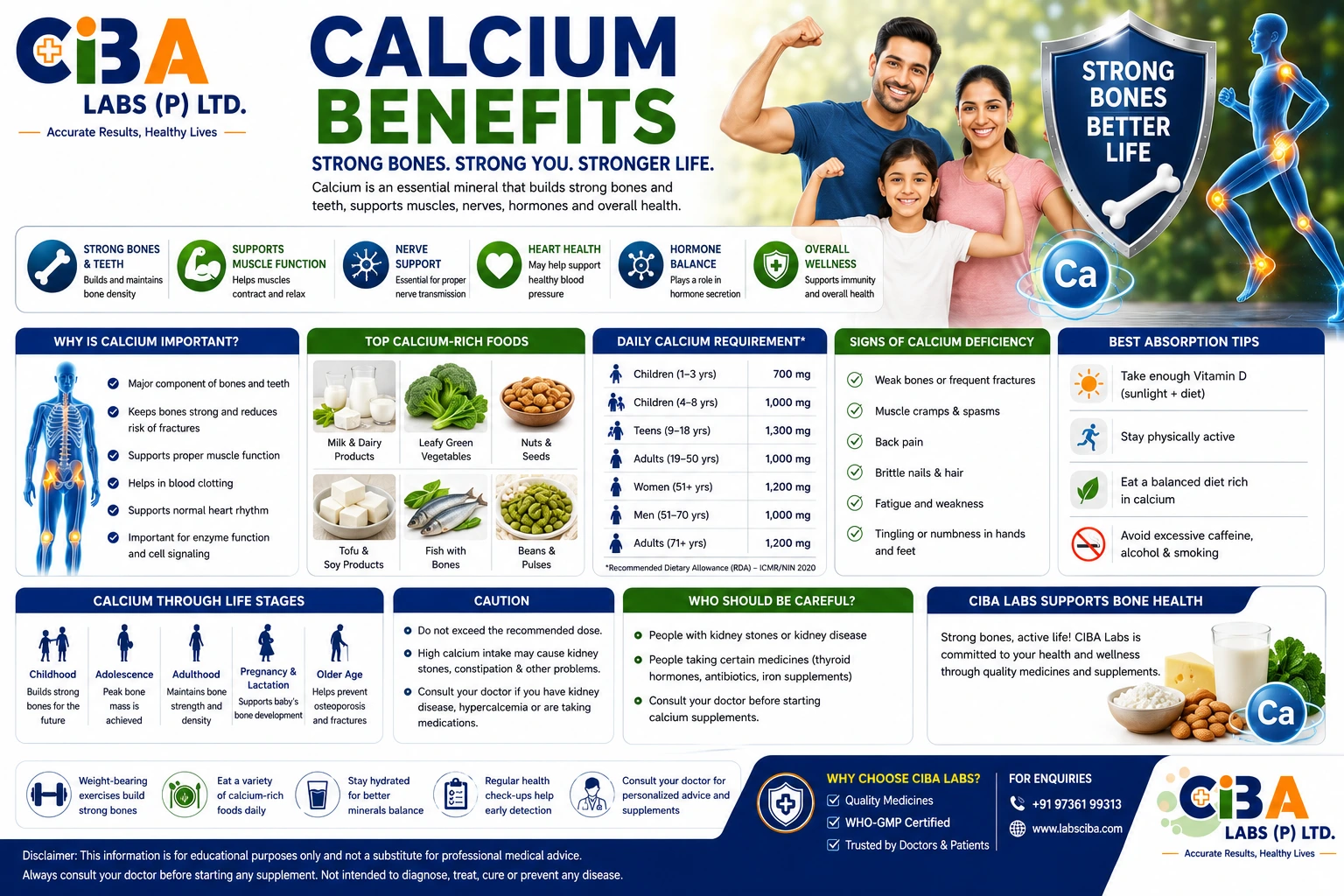
Calcium is the most abundant mineral in the human body and is essential for maintaining strong bones and teeth. It also supports normal muscle movement, nerve signalling, blood clotting, blood-vessel function and hormone release. Vitamin D helps the body absorb calcium. citeturn0search0turn0search1
Although calcium is strongly associated with bone health, its role extends throughout the body. Getting enough calcium from a balanced diet is important at every stage of life, while supplementation may be appropriate for some people depending on their nutritional intake and individual circumstances.
What Is Calcium?
Calcium is stored mainly in bones and teeth, where it provides structure and hardness. The smaller circulating pool of calcium is involved in muscle contraction, nerve transmission, blood clotting and other physiological functions. citeturn0search1
Top Benefits and Functions of Calcium
Helps build and maintain strong bones.
Supports healthy teeth and normal tooth structure.
Helps muscles contract and move normally.
Supports transmission of nerve signals.
Plays an important role in normal blood clotting.
Supports normal blood-vessel contraction and dilation.
Contributes to normal hormone and cellular functions.
Calcium and Bone Health
Almost all of the body's calcium is stored in bones and teeth. Bone is continuously remodelled throughout life, and calcium is part of the mineral structure that gives bone strength. citeturn0search1
Bone loss can increase with age, and osteoporosis can result in weak, fragile bones and a higher risk of fractures. Adequate calcium intake is an important part of overall bone-health nutrition, together with appropriate physical activity, vitamin D, protein and other healthy lifestyle habits. Evidence about whether calcium supplements prevent fractures in older adults is mixed, so supplements should not be presented as a guaranteed fracture-prevention treatment. citeturn0search0turn0search1
Calcium and Vitamin D
Vitamin D helps the body absorb calcium from the intestine. Adequate vitamin D is therefore important for maintaining calcium balance and supporting bone health. citeturn0search0turn0search1
How Much Calcium Do You Need?
NIH lists 1,000 mg per day for adults aged 19–50, 1,000 mg for men aged 51–70, 1,200 mg for women aged 51–70, and 1,200 mg for adults aged 71 and older. Teenagers aged 14–18 need 1,300 mg per day. citeturn0search0
Pregnancy, breastfeeding, age, diet and individual health circumstances can affect nutritional needs. A healthcare professional can help determine whether dietary intake is adequate.
Calcium-Rich Foods
Food is an important source of calcium. Common calcium-containing foods include dairy products, certain vegetables, fish eaten with edible bones, fortified beverages and some fortified foods. citeturn0search0turn0search1
Milk, yogurt and cheese.
Canned sardines or salmon with edible bones.
Kale, broccoli and Chinese cabbage (bok choy).
Calcium-fortified plant beverages such as some soy or almond beverages.
Calcium-fortified juices.
Some tofu and ready-to-eat cereals when calcium-fortified.
Who May Be at Risk of Inadequate Calcium Intake?
People who avoid dairy products without replacing them with other calcium sources.
People with restricted or limited diets.
People with lactose intolerance or milk allergy who do not use suitable calcium-rich alternatives.
Postmenopausal women, who can experience increased bone loss.
Older adults and others whose dietary intake may be inadequate.
People with medical or digestive conditions that affect nutrient absorption.
Individual risk varies, and dietary assessment is more useful than assuming everyone in a particular group needs a supplement. citeturn0search0turn0search1
What Happens If You Do Not Get Enough Calcium?
Insufficient calcium intake over time can contribute to problems with bone health. NIH notes that inadequate calcium can contribute to osteoporosis in adults and osteomalacia, while inadequate calcium can contribute to rickets in children. citeturn0search0turn0search3
Calcium Supplements: What You Should Know
Calcium is available in dietary supplements, including products containing calcium alone and products combining calcium with other nutrients such as vitamin D. Two common forms are calcium carbonate and calcium citrate. Calcium carbonate is absorbed best with food, while calcium citrate can be absorbed with or without food. citeturn0search0
NIH notes that calcium is absorbed best when supplemental doses are 500 mg or less at one time. Calcium supplements can cause gas, bloating or constipation in some people. citeturn0search0
Can Too Much Calcium Be Harmful?
Yes. More calcium is not always better. High calcium intake, particularly from supplements, can cause adverse effects and may increase the risk of kidney stones in some people. Research has also raised questions about possible cardiovascular effects of high supplemental calcium intake. citeturn0search1
For adults, the tolerable upper intake level for calcium is 2,500 mg per day for ages 19–50 and 2,000 mg per day for adults over 50, from all sources. These are upper limits, not recommended daily targets. citeturn0search1
Calcium and Medicine Interactions
Calcium supplements can interact with certain medicines, including levothyroxine, dolutegravir, lithium and some quinolone antibiotics. People taking prescription medicines should check with a doctor or pharmacist about the timing and safety of calcium supplements. citeturn0search1
Healthy Habits for Strong Bones
Include calcium-rich foods in a varied diet.
Maintain adequate vitamin D according to individual needs.
Include appropriate weight-bearing and muscle-strengthening physical activity.
Eat enough protein and a variety of nutrient-rich foods.
Avoid smoking.
Limit excessive alcohol consumption.
Discuss bone-health concerns and fracture risk with a healthcare professional.
Calcium for Different Life Stages
Children and Teenagers
Childhood and adolescence are important periods for building bone. NIH recommends 1,300 mg per day for ages 9–18. citeturn0search0
Adults
Adults need calcium to maintain bone mineral content while supporting normal muscle, nerve and other physiological functions. The NIH recommended amount for adults aged 19–50 is 1,000 mg per day. citeturn0search0
Older Adults
Bone loss becomes more common with advancing age. NIH recommends 1,200 mg per day for adults aged 71 and older. Supplementation decisions should consider dietary intake, medications, medical history and individual risk. citeturn0search0turn0search1
Frequently Asked Questions
Why is calcium important?
Calcium supports strong bones and teeth and is also needed for normal muscle movement, nerve signalling, blood clotting and other functions. citeturn0search0turn0search1
How much calcium do adults need?
NIH lists 1,000 mg per day for adults aged 19–50, 1,000 mg for men 51–70, 1,200 mg for women 51–70, and 1,200 mg for adults 71 and older. citeturn0search0
Which foods are high in calcium?
Milk, yogurt, cheese, certain vegetables, fish with edible bones and calcium-fortified foods and beverages are important sources. citeturn0search0
Why is vitamin D important with calcium?
Vitamin D helps the body absorb calcium from the intestine. citeturn0search0
Can calcium supplements cause side effects?
Yes. Some people experience gas, bloating or constipation. High intakes can also cause other health risks. citeturn0search0turn0search1
Can I take calcium with my medicines?
Some medicines interact with calcium supplements. Ask a doctor or pharmacist about your medicines. citeturn0search1
Is more calcium always better?
No. The goal is adequate intake, not excessive intake. High supplemental calcium can have risks. citeturn0search1
Does CIBA Labs have a calcium product?
No calcium-specific product was included in the CIBA Labs product list supplied for this blog series. A product should only be added after its current approved composition is confirmed.
Why Choose CIBA Labs?
CIBA Labs is building a diverse pharmaceutical and healthcare portfolio across multiple therapeutic areas. Product information should always be communicated according to current approved product information, with appropriate attention to responsible healthcare use.
Conclusion
Calcium is essential for strong bones and teeth, but its importance goes beyond the skeleton. It supports normal muscle function, nerve transmission, blood clotting and other important body processes. citeturn0search0turn0search1
The best approach is to obtain adequate calcium through a balanced diet and consider supplements only when appropriate for individual nutritional needs. Vitamin D, physical activity and other healthy lifestyle habits also contribute to overall bone health.
CIBA Labs should only promote a calcium-specific product when its current approved composition and product information have been confirmed. This approach keeps the blog useful, credible and medically responsible.
Call to Action
Explore the CIBA Labs product portfolio to learn more about our pharmaceutical and healthcare products. For product-specific information or business enquiries, contact the CIBA Labs team.
Medical and Product Information Disclaimer: This article is for general educational purposes only and is not a substitute for medical advice, diagnosis or treatment. Calcium requirements and supplement needs vary between individuals. Always consult a qualified healthcare professional before starting calcium or other dietary supplements, particularly if you take medicines or have a medical condition.
Reference Sources
NIH Office of Dietary Supplements, Calcium Fact Sheet for Consumers and Calcium Fact Sheet for Health Professionals, updated June 22, 2026. These sources support the calcium functions, recommended intakes, food sources, supplementation information, risks and medication-interaction statements used in this article. citeturn0search0turn0search1