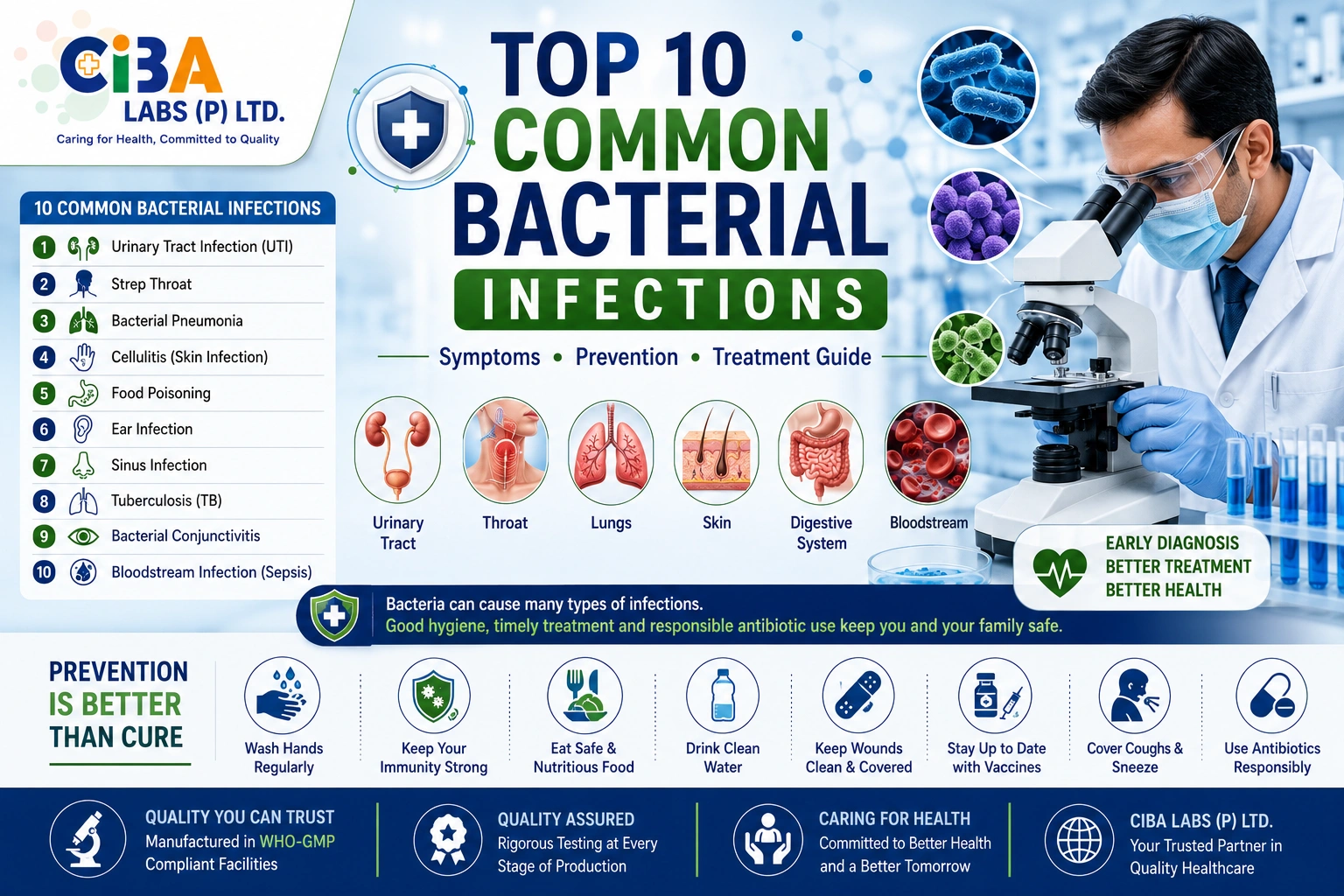
Top 10 Common Bacterial Infections: Symptoms, Causes, Prevention & Treatment Guide
Introduction
Bacterial infections are among the most common reasons people seek medical care worldwide. They can affect nearly every part of the body, including the respiratory system, urinary tract, digestive system, skin, and bloodstream. While many bacterial infections are mild and respond well to appropriate medical treatment, some can become serious if left untreated.
Understanding how bacterial infections develop, recognizing their symptoms, and knowing when to seek medical care are essential steps toward protecting your health.
Although antibiotics have significantly improved the treatment of bacterial diseases, they should only be used when prescribed by a qualified healthcare professional. Using antibiotics incorrectly can contribute to antibiotic resistance, making future infections more difficult to treat.
In this comprehensive guide, CIBA Labs explains the most common bacterial infections, their causes, symptoms, diagnosis, treatment options, prevention strategies, and when to seek medical attention.
What Are Bacterial Infections?
Bacterial infections occur when harmful bacteria enter the body, multiply, and cause illness.
Although millions of bacteria live naturally on our skin, in our digestive system, and in the environment—and many are beneficial—certain types can lead to infections under specific circumstances.
These infections may affect:
- Respiratory system
- Digestive tract
- Urinary tract
- Skin
- Eyes
- Ears
- Bloodstream
- Reproductive system
The severity of an infection depends on factors such as the type of bacteria, the person's overall health, and how quickly appropriate treatment is received.
How Do Bacterial Infections Spread?
Bacteria can spread through several routes, including:
Direct Contact
Touching an infected person or their wounds.
Airborne Droplets
Some bacteria spread through coughing or sneezing.
Contaminated Food and Water
Eating improperly cooked food or drinking contaminated water may lead to foodborne bacterial infections.
Contaminated Surfaces
Touching contaminated objects and then touching the eyes, nose, or mouth can sometimes spread bacteria.
Animal Contact
Some bacterial infections can spread through contact with infected animals or insect bites.
Common Symptoms of Bacterial Infections
Symptoms vary depending on the affected part of the body.
Common signs include:
- Fever
- Chills
- Fatigue
- Swelling
- Pain
- Redness
- Pus formation
- Persistent cough
- Painful urination
- Diarrhea
- Vomiting
- Sore throat
Not every infection causes all of these symptoms. Some bacterial infections may produce only mild signs, while others require urgent medical attention.
1. Urinary Tract Infection (UTI)
A urinary tract infection is one of the most common bacterial infections, particularly among women.
Common Symptoms
- Burning sensation during urination
- Frequent urge to urinate
- Cloudy urine
- Pelvic discomfort
- Strong-smelling urine
Risk Factors
- Poor hydration
- Urinary obstruction
- Diabetes
- Pregnancy
- Female anatomy
Prevention
- Drink adequate water.
- Maintain good personal hygiene.
- Avoid delaying urination.
- Follow your healthcare provider's advice if infections recur.
2. Strep Throat
Strep throat is a bacterial infection of the throat caused by Group A Streptococcus bacteria.
Symptoms
- Severe sore throat
- Fever
- Pain while swallowing
- Swollen lymph nodes
- Red throat
Diagnosis
Healthcare providers may perform:
- Physical examination
- Rapid strep test
- Throat swab
Treatment
Treatment depends on the healthcare provider's diagnosis and may include prescribed antibiotics when appropriate.
3. Bacterial Pneumonia
Pneumonia is an infection of the lungs. While it can be caused by bacteria, viruses, or fungi, bacterial pneumonia is a common form that may require medical treatment.
Symptoms
- Persistent cough
- Fever
- Chills
- Chest pain
- Difficulty breathing
- Fatigue
Risk Factors
- Older age
- Smoking
- Chronic lung disease
- Weakened immune system
Early diagnosis is important to reduce the risk of complications.
4. Cellulitis
Cellulitis is a bacterial infection of the deeper layers of the skin.
Symptoms
- Redness
- Swelling
- Warm skin
- Tenderness
- Fever
Prevention
- Clean cuts promptly.
- Protect wounds.
- Practice good skin hygiene.
- Seek medical advice if redness spreads rapidly.
5. Bacterial Food Poisoning
Certain bacteria can contaminate food and cause gastrointestinal illness.
Symptoms
- Diarrhea
- Vomiting
- Stomach cramps
- Fever
- Nausea
Prevention
- Wash hands before preparing food.
- Cook food thoroughly.
- Refrigerate perishable foods promptly.
- Avoid cross-contamination between raw and cooked foods.
Why Early Diagnosis Matters
Many bacterial infections respond well to treatment when diagnosed early. Delaying medical care may increase the risk of complications in some cases.
If symptoms are severe, persistent, or worsening, consult a qualified healthcare professional promptly.
6. Ear Infection (Bacterial Otitis Media)
Ear infections are common, particularly in infants and young children. While some ear infections are viral, others are caused by bacteria and may require medical evaluation.
Common Symptoms
- Ear pain
- Fever
- Difficulty hearing
- Fluid drainage from the ear
- Irritability in children
- Difficulty sleeping
Risk Factors
- Young age
- Recent cold or upper respiratory infection
- Allergies
- Exposure to tobacco smoke
Prevention
- Maintain good hand hygiene.
- Keep childhood vaccinations up to date.
- Avoid exposure to cigarette smoke.
- Practice good respiratory hygiene.
7. Bacterial Sinus Infection
Most sinus infections are viral, but some cases become bacterial, particularly when symptoms persist or worsen after several days.
Symptoms
- Facial pain or pressure
- Thick nasal discharge
- Nasal congestion
- Fever
- Headache
- Reduced sense of smell
Prevention
- Wash hands regularly.
- Stay hydrated.
- Manage allergies appropriately.
- Avoid smoking.
8. Tuberculosis (TB)
Tuberculosis is caused by the bacterium Mycobacterium tuberculosis and primarily affects the lungs, although it can involve other organs.
Common Symptoms
- Persistent cough lasting more than two weeks
- Fever
- Night sweats
- Weight loss
- Fatigue
- Chest pain
Risk Factors
- Close contact with an infected person
- Weakened immune system
- Crowded living conditions
Diagnosis
Healthcare professionals may recommend:
- Chest X-ray
- Sputum examination
- Molecular diagnostic tests
- Skin or blood tests
Treatment
TB requires specialized medical treatment under professional supervision. Patients should follow the complete treatment plan prescribed by their healthcare provider.
9. Bacterial Conjunctivitis (Pink Eye)
Bacterial conjunctivitis affects the membrane covering the eye and inner eyelid.
Symptoms
- Red eyes
- Thick yellow or green discharge
- Sticky eyelids
- Eye irritation
- Tearing
Prevention
- Wash hands frequently.
- Avoid touching the eyes.
- Do not share towels or eye cosmetics.
- Replace contaminated contact lenses when advised.
10. Bloodstream Infection (Bacteremia and Sepsis)
Bacteria can sometimes enter the bloodstream. In some cases, this may lead to sepsis, a potentially life-threatening medical emergency.
Warning Signs
- High fever
- Rapid heartbeat
- Confusion
- Difficulty breathing
- Low blood pressure
- Extreme weakness
Seek emergency medical care immediately if these symptoms occur.
How Doctors Diagnose Bacterial Infections
The diagnosis depends on the location and type of infection.
A healthcare professional may recommend:
Physical Examination
The doctor evaluates symptoms, medical history, and affected areas.
Blood Tests
Blood tests may help identify signs of infection or inflammation.
Urine Test
Used to help diagnose urinary tract infections.
Throat Swab
Often used when strep throat is suspected.
Sputum Test
Helps identify bacteria causing lung infections.
Wound Culture
A sample from an infected wound may be tested to identify the bacteria involved.
Imaging Studies
Depending on the condition, imaging such as X-rays, ultrasound, or CT scans may be used to support diagnosis.
Treatment Options
Treatment depends on:
- The type of bacteria
- The location of the infection
- Severity of illness
- Patient age
- Medical history
- Laboratory findings
Treatment may include:
- Prescription antibiotics (when appropriate)
- Rest
- Adequate hydration
- Fever management
- Wound care
- Hospital treatment for severe infections
Patients should always follow the advice of their healthcare provider.
Responsible Antibiotic Use
Antibiotics should be used only when prescribed for bacterial infections.
Avoid:
- Self-medicating
- Sharing antibiotics
- Skipping doses
- Stopping treatment without medical advice
- Using leftover antibiotics
Responsible antibiotic use helps reduce the risk of antibiotic resistance.
Possible Complications
Untreated bacterial infections may lead to complications depending on the type and severity of the illness.
Potential complications include:
- Kidney infection
- Pneumonia complications
- Bloodstream infection
- Organ damage
- Abscess formation
- Chronic infection
Early diagnosis and appropriate treatment reduce these risks.
Who Is at Higher Risk?
Some individuals may have a greater chance of developing serious bacterial infections, including:
- Infants
- Older adults
- Pregnant women
- People with diabetes
- Individuals with weakened immune systems
- Cancer patients
- Organ transplant recipients
- People with chronic lung disease
These groups should seek medical advice promptly if symptoms of infection develop.
Frequently Asked Questions (Part 1)
Are all bacterial infections treated with antibiotics?
Not always. The need for antibiotics depends on the type of infection, its severity, and a healthcare professional's assessment.
Can bacterial infections spread from person to person?
Some bacterial infections are contagious, while others are not. The mode of transmission depends on the specific bacteria.
How can I reduce my risk of bacterial infections?
Good hygiene, safe food handling, recommended vaccinations, proper wound care, and a healthy lifestyle can help lower the risk.
Can bacterial infections become serious?
Yes. Some bacterial infections can become severe if left untreated, making early medical evaluation important.
Can children develop bacterial infections?
Yes. Children can develop bacterial infections, and they should be evaluated by a healthcare professional when symptoms are concerning.
How to Help Prevent Bacterial Infections
Preventing bacterial infections starts with healthy daily habits. While it is not always possible to avoid infections completely, following good hygiene and preventive measures can significantly reduce the risk.
Wash Your Hands Properly
Handwashing is one of the simplest and most effective ways to prevent the spread of bacteria.
Wash your hands:
- Before eating
- Before preparing food
- After using the restroom
- After coughing or sneezing
- After touching pets
- After handling garbage
Use soap and water for at least 20 seconds or an alcohol-based hand sanitizer when soap and water are unavailable.
Practice Safe Food Handling
Many bacterial infections originate from contaminated food.
Food Safety Tips
- Wash fruits and vegetables thoroughly.
- Cook meat, poultry, and seafood completely.
- Avoid consuming expired food.
- Refrigerate leftovers promptly.
- Keep raw and cooked foods separate.
- Drink clean and safe water.
Proper food hygiene helps reduce the risk of foodborne illnesses.
Take Care of Cuts and Wounds
Even small cuts can become infected if not cared for properly.
Wound Care Tips
- Clean wounds with clean water.
- Apply an appropriate antiseptic if recommended.
- Cover wounds with a clean bandage.
- Change dressings regularly.
- Watch for redness, swelling, or pus.
Seek medical advice if signs of infection develop.
Maintain a Healthy Immune System
A healthy immune system helps the body respond effectively to infections.
Support your health by:
- Eating a balanced diet
- Staying physically active
- Sleeping 7–9 hours each night
- Drinking enough water
- Managing stress
- Avoiding smoking
- Limiting alcohol consumption
Keep Vaccinations Up to Date
Vaccines help protect against several bacterial diseases and contribute to overall public health.
Follow the vaccination schedule recommended by your healthcare provider.
Avoid Misusing Antibiotics
Responsible antibiotic use is essential.
Remember:
- Never self-medicate.
- Never share antibiotics.
- Do not use leftover antibiotics.
- Take medicines exactly as prescribed.
- Consult a healthcare professional before starting or stopping any antibiotic.
Using antibiotics responsibly helps preserve their effectiveness.
When Should You See a Doctor?
Consult a healthcare professional if you experience:
- High fever lasting several days
- Difficulty breathing
- Severe sore throat
- Persistent cough
- Painful urination
- Increasing redness or swelling of the skin
- Persistent vomiting or diarrhea
- Symptoms that worsen instead of improving
Early diagnosis often leads to better outcomes.
Seek Emergency Medical Care Immediately If You Experience
Seek urgent medical attention if you have:
- Difficulty breathing
- Chest pain
- Severe confusion
- Loss of consciousness
- High fever with a stiff neck
- Rapidly spreading skin infection
- Signs of sepsis such as confusion, rapid heartbeat, rapid breathing, or very low blood pressure
These symptoms require immediate medical evaluation.
Frequently Asked Questions (Part 2)
Can bacterial infections go away on their own?
Some mild bacterial infections may improve without antibiotics, while others require medical treatment. A healthcare professional can determine the most appropriate approach based on the specific infection.
How long does recovery usually take?
Recovery depends on the type of infection, the person's overall health, and whether treatment is needed. Always follow your healthcare provider's recommendations.
Can bacterial infections return?
Yes. Some infections can recur, particularly if underlying risk factors remain or the infection is not fully resolved.
Are bacterial infections contagious?
Some bacterial infections can spread from person to person, while others are acquired from contaminated food, water, animals, or the environment.
Can healthy people get bacterial infections?
Yes. Anyone can develop a bacterial infection, although people with weakened immune systems, chronic illnesses, or certain risk factors may be more susceptible.
Why Choose CIBA Labs?
At CIBA Labs, we are committed to supporting better healthcare through quality-focused pharmaceutical products and patient education.
Our commitment includes:
- Quality-focused pharmaceutical manufacturing
- GMP-oriented production practices
- Reliable quality assurance
- Continuous innovation
- Commitment to patient safety
- Trusted healthcare solutions
We believe that informed patients and high-quality medicines contribute to healthier communities.
Conclusion
Bacterial infections are common, but many can be prevented through good hygiene, safe food practices, timely medical care, and responsible antibiotic use. Recognizing symptoms early and seeking professional medical advice when needed can help reduce the risk of complications.
Understanding the causes, symptoms, prevention strategies, and treatment options empowers individuals to make informed healthcare decisions. Together with quality healthcare products and responsible medicine use, preventive habits play an essential role in protecting individual and public health.
Call to Action
At CIBA Labs, we are dedicated to promoting healthier communities through quality pharmaceutical products and reliable healthcare education.
Explore our Products page to learn more about our pharmaceutical solutions, or Contact Us to connect with our team for additional information.