The Indian pharmaceutical industry is one of the fastest-growing sectors globally. However, behind every successful medicine brand, there is a strong distribution network that ensures medicines reach hospitals, doctors, chemists, and ultimately patients.
One of the most frequently asked questions by pharma entrepreneurs is:
"How much margin does a pharma distributor earn?"
The answer is not as simple as a fixed percentage because pharmaceutical distribution involves multiple stakeholders, operating costs, regulatory compliance, and market dynamics.
This comprehensive guide explains every aspect of pharma distributor margins in a practical and easy-to-understand manner.
Understanding the Pharmaceutical Distribution Chain
Before understanding margins, it is important to understand the medicine supply chain.
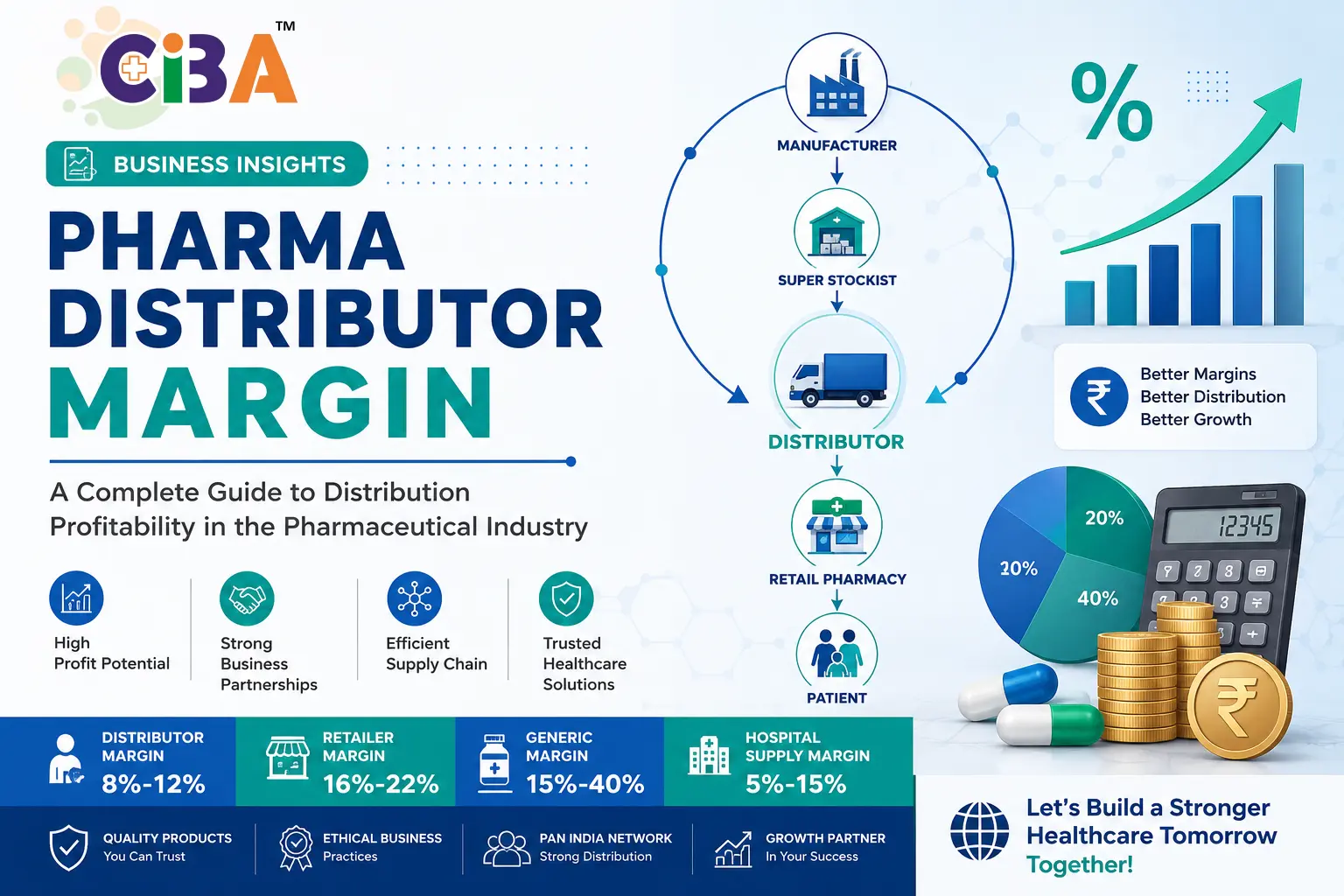
The distribution channel generally follows this structure:
Pharmaceutical Company → Super Stockist/C&F Agent → Distributor → Retail Chemist → Patient
In some cases, companies directly supply distributors without involving super stockists.
Every participant in this chain earns a certain margin for performing their role.
Who is a Pharma Distributor?
A pharma distributor is a licensed business entity responsible for purchasing medicines from pharmaceutical companies and supplying them to retail pharmacies, hospitals, clinics, and healthcare institutions.
Their primary responsibilities include:
- Purchasing medicines from pharma companies
- Maintaining inventory
- Managing storage conditions
- Delivering products to retailers
- Handling returns and expiry products
- Ensuring regulatory compliance
- Managing payments and credit cycles
Distributors act as the backbone of medicine availability in the market.
What is Pharma Distributor Margin?
Pharma distributor margin refers to the percentage of profit distributors earn on the sale of pharmaceutical products.
It is usually calculated on the Maximum Retail Price (MRP) or Purchase Price, depending upon company policy.
Formula:
Distributor Margin (%) = (Selling Price - Purchase Price) ÷ Selling Price × 100
Margins vary depending on:
- Product category
- Brand strength
- Competition level
- Company policies
- Geographic location
- Sales volume
Standard Margin Structure in India
Although margins vary, the industry follows certain common practices.
| Channel | Approximate Margin |
|---|---|
| Retail Chemist | 16% - 22% |
| Distributor | 8% - 12% |
| Super Stockist | 4% - 8% |
| Hospital Supply | 5% - 15% |
| Generic Medicines | 15% - 40% |
These figures are indicative and may differ significantly based on business agreements.
Different Margin Models Used in Pharma Industry
1. Ethical Pharma Distribution
Ethical pharma products are prescription medicines promoted through doctors.
Typical Margin Structure
- Distributor: 8% to 10%
- Retailer: 20%
Characteristics
- Doctor-driven sales
- High brand loyalty
- Stable business
- Lower distributor margins but consistent demand
Examples:
- Antibiotics
- Cardiac medicines
- Diabetic medicines
- Gastro products
2. Generic Pharma Distribution
Generic medicines usually offer higher margins.
Typical Margin Structure
- Distributor: 10% to 20%
- Retailer: 20% to 50%
Characteristics:
- Price-sensitive market
- High competition
- Better profitability
- Requires aggressive sales efforts
3. OTC (Over-The-Counter) Products
These products are sold without prescriptions.
Examples:
- Vitamins
- Protein supplements
- Pain balms
- Antacids
Distributor margins:
8% to 15%
4. Hospital Supply Distribution
Hospitals purchase medicines in bulk quantities.
Distributor margins:
5% to 12%
Advantages:
- Large order volumes
- Stable recurring business
Challenges:
- Longer payment cycles
How Does Distributor Profit Actually Work?
Many people assume distributor margin equals profit.
That is incorrect.
Distributors incur several expenses.
For example:
Suppose:
Medicine MRP = ₹100
Distributor Margin = 10%
Distributor Purchase Price = ₹90
Distributor sells to retailer = ₹100
Gross earning = ₹10
However, expenses include:
- Staff salaries
- Delivery vehicles
- Rent
- Electricity
- GST compliance
- Software expenses
- Packaging costs
- Interest on working capital
Actual net profit may only be 2% to 5%.
Factors Affecting Pharma Distributor Margins
1. Brand Value
Established brands offer lower margins because demand already exists.
New companies often provide higher margins to penetrate markets.
2. Product Category
Different therapies have different margins.
Examples:
Lower Margin Segments
- Cardiac
- Diabetic
- Oncology
Higher Margin Segments
- Nutraceuticals
- Herbal products
- Dermatology products
3. Competition
High competition often pushes companies to offer better margins.
4. Geographic Location
Urban markets:
- High sales volume
- Lower margins
Rural markets:
- Lower sales volume
- Higher incentives
5. Credit Period
Longer credit periods reduce profitability.
Common credit cycles:
- 30 Days
- 45 Days
- 60 Days
- 90 Days
The longer the credit cycle, the higher the financial burden.
Expenses a Pharma Distributor Bears
A successful distributor must manage various operational expenses.
Infrastructure Costs
- Warehouse rent
- Office setup
- Air conditioning
- Storage racks
Human Resources
- Sales executives
- Delivery staff
- Accountants
- Helpers
Technology Expenses
- Billing software
- Barcode systems
- Inventory management systems
Transportation Costs
- Fuel
- Vehicle maintenance
- Delivery logistics
Regulatory Costs
- Drug license renewals
- GST filings
- Audits
Licenses Required to Become a Pharma Distributor in India
Mandatory documents include:
Drug License
Issued under Drugs and Cosmetics Act.
GST Registration
Required for taxation purposes.
Business Registration
Proprietorship, Partnership, LLP or Private Limited Company.
Storage Requirements
Temperature-controlled storage facilities.
Pharmacist Appointment
Some states mandate pharmacist supervision.
Challenges Faced by Pharma Distributors
Expiry Management
Unsold medicines approaching expiry create financial losses.
Payment Delays
Retailers may delay payments.
This impacts cash flow.
Competition
Numerous distributors compete in the same territory.
Price Control Regulations
Government regulations may impact profitability.
Inventory Management
Overstocking and understocking both create problems.
How Pharma Companies Can Attract Better Distributors
Companies looking to build a strong distribution network should focus on long-term partnerships.
Strategies include:
Offer Competitive Margins
Keep distributor profitability healthy.
Maintain Product Availability
Avoid stock shortages.
Support Marketing Activities
Provide:
- Visual aids
- Product brochures
- Doctor samples
- Promotional materials
Faster Claims Settlement
Promptly settle:
- Expiry claims
- Scheme claims
- Promotional incentives
Digital Support
Provide online ordering systems and mobile apps.
Ideal Margin Strategy for New Pharma Companies
For emerging pharmaceutical companies, a balanced structure may look like:
| Stakeholder | Suggested Margin |
|---|---|
| Super Stockist | 5% |
| Distributor | 10% |
| Retail Chemist | 20% |
Additional incentives:
- Quarterly bonus schemes
- Target-based rewards
- Early payment discounts
This creates a win-win ecosystem.
Tips for Pharma Entrepreneurs
If you are starting a pharmaceutical company, remember these points:
- Do not focus only on higher margins.
- Build trust with distributors.
- Ensure consistent supply.
- Provide transparent pricing.
- Set realistic sales targets.
- Resolve disputes quickly.
- Offer marketing support.
Strong relationships build long-term businesses.
Future of Pharma Distribution in India
The pharmaceutical distribution landscape is evolving rapidly.
Key trends include:
- Digital ordering platforms
- AI-based inventory forecasting
- E-pharmacy integration
- Real-time supply chain tracking
- Data-driven sales analysis
- Automated warehouse systems
Distributors who adopt technology will remain competitive.
Conclusion
Pharma distributor margin is much more than a percentage figure. It is a carefully balanced business model involving profitability, operational efficiency, regulatory compliance, and strong business relationships.
For pharmaceutical companies, distributors are not merely customers; they are strategic growth partners. A successful pharmaceutical brand is built when manufacturers, distributors, retailers, and healthcare professionals work together.
At CIBA LABS Pvt. Ltd., we believe that sustainable partnerships and transparent business practices create long-term success for everyone in the pharmaceutical ecosystem.
A distributor who earns fairly, operates efficiently, and trusts the company will always contribute significantly to market expansion and brand growth.
Because in the pharmaceutical industry, strong distribution is not an expense—it is an investment in growth.