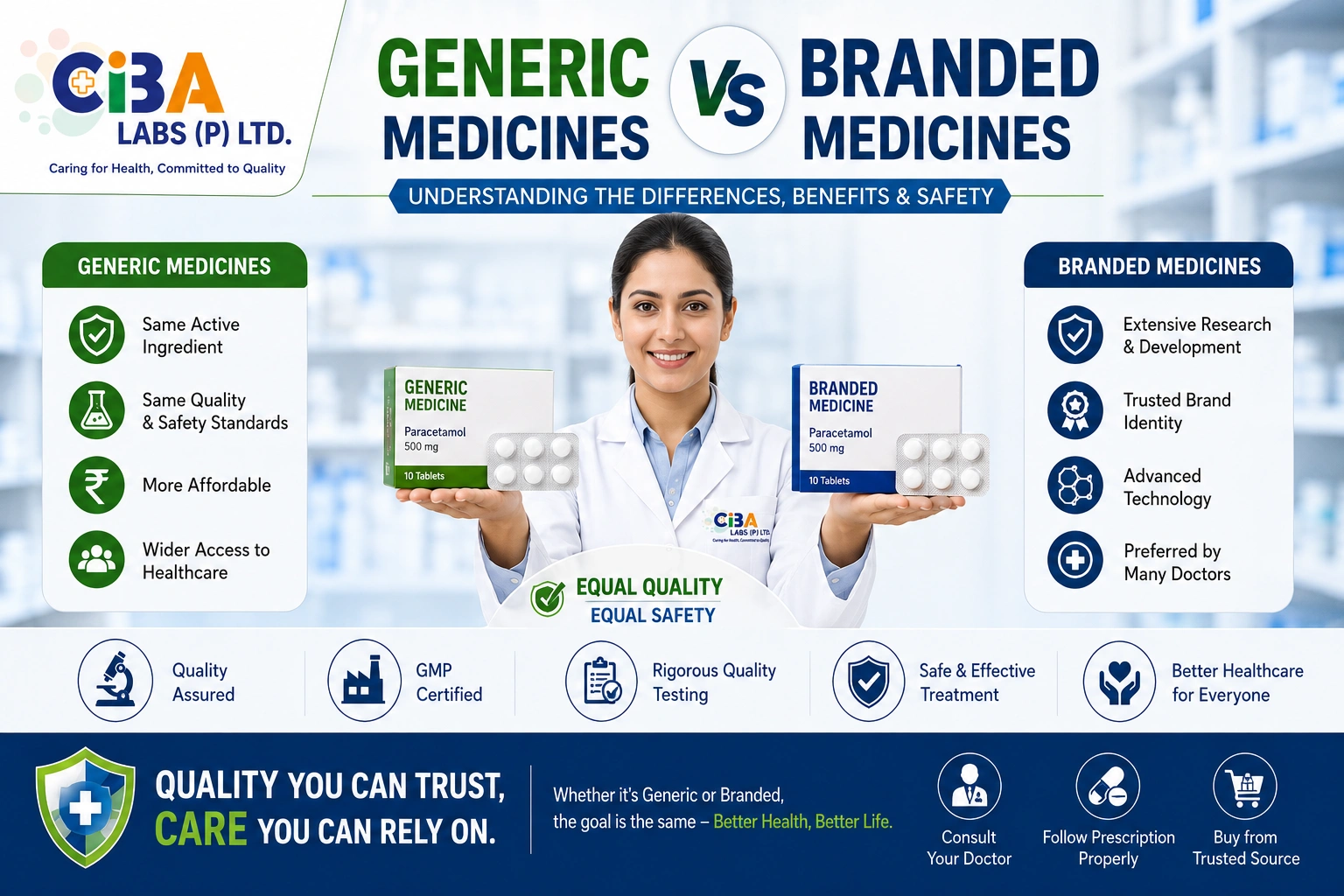
Generic vs Branded Medicines: Understanding the Differences, Benefits, and Safety
Introduction
When your doctor prescribes medication, you may notice that the pharmacist offers two options: a branded medicine or a generic medicine. Many patients wonder whether generic medicines are as effective, safe, and reliable as branded medicines. Some believe lower cost means lower quality, while others assume branded medicines always work better.
In reality, both generic and branded medicines play an important role in healthcare. Understanding how they are developed, approved, and used can help patients make informed decisions together with their healthcare professionals.
This guide explains the key differences between generic and branded medicines, how they are regulated, their benefits, and common misconceptions.
What Are Branded Medicines?
Branded medicines are pharmaceutical products marketed under a trade or brand name by a pharmaceutical company.
These medicines are developed after years of research, laboratory testing, clinical trials, and regulatory review before they become available for patients.
When a company develops a new medicine, it is generally protected by a patent for a limited period, allowing the company to market it exclusively before generic versions may become available, subject to applicable regulations.
Examples of branded medicines include products sold under proprietary names chosen by pharmaceutical manufacturers.
What Are Generic Medicines?
Generic medicines contain the same active ingredient as an approved reference (brand-name) medicine and are intended to be used in the same way.
A generic medicine is approved only after meeting the regulatory requirements established by the relevant health authorities in the country where it is marketed.
Depending on local regulations, approved generic medicines are expected to provide the same therapeutic effect when used as directed.
Key Differences Between Generic and Branded Medicines
| Branded Medicines | Generic Medicines |
|---|---|
| Marketed under a brand name | Usually marketed under the active ingredient name or another approved name |
| Initially introduced after extensive research and development | Introduced after applicable regulatory requirements are met |
| Often cost more because research and development costs are reflected in pricing | Often cost less because the original research has already been completed |
| Packaging and appearance may differ | Packaging and appearance may differ from branded medicines |
| Same active ingredient (for approved generic equivalents) | Same active ingredient as the reference medicine |
Why Are Generic Medicines Usually More Affordable?
One of the main reasons generic medicines often cost less is that the original manufacturer has already invested in discovering and developing the medicine.
Once patent protections expire (where applicable), other manufacturers may produce approved generic versions after meeting regulatory standards.
Because they generally do not repeat the original discovery and development process, production costs may be lower, contributing to more affordable pricing.
Are Generic Medicines Effective?
Approved generic medicines are expected to perform in the same way as their reference medicine when used according to approved labeling and regulatory standards.
Healthcare authorities evaluate approved generic medicines to help ensure they meet established requirements for:
- Quality
- Safety
- Performance
- Manufacturing standards
Patients should always take medicines exactly as prescribed and consult their healthcare provider if they have questions or concerns.
Are Generic Medicines Safe?
Yes, medicines that have been approved by the relevant regulatory authority are required to meet established standards for quality, safety, and manufacturing.
Manufacturers must follow Good Manufacturing Practices (GMP) and comply with applicable regulatory requirements.
Quality checks may include:
- Raw material testing
- Manufacturing process controls
- Stability testing
- Packaging inspections
- Quality assurance procedures
Do Generic and Branded Medicines Look Different?
Yes.
Although they contain the same active ingredient (for approved generic equivalents), generic medicines may differ in:
- Color
- Shape
- Size
- Packaging
- Inactive ingredients (such as fillers or coatings)
These differences generally do not change the intended therapeutic use when the medicine has been approved as a generic equivalent.
Understanding Active and Inactive Ingredients
Every medicine contains:
Active Ingredient
The active ingredient is the substance responsible for the medicine's intended therapeutic effect.
Inactive Ingredients
Inactive ingredients help with:
- Tablet formation
- Stability
- Taste
- Color
- Shelf life
- Absorption characteristics
Inactive ingredients may vary between manufacturers, which is why medicines can look different even when they contain the same active ingredient.
Benefits of Generic Medicines
Generic medicines provide several advantages, including:
- More affordable treatment options
- Wider patient access to medicines
- High manufacturing standards
- Availability through hospitals and pharmacies
- Support for long-term treatment when prescribed
Common Conditions Treated with Generic Medicines
Generic medicines are available for many health conditions, including:
- High blood pressure
- Diabetes
- Bacterial infections
- Allergies
- Pain management
- Asthma
- Heart disease
- Gastrointestinal disorders
The availability of generic versions depends on the specific medicine and applicable regulatory approvals.
Bioequivalence: Why Generic Medicines Work Like Their Branded Counterparts
One of the most common questions patients ask is:
"If a generic medicine costs less, will it work as well as the branded medicine?"
The answer lies in a scientific concept called bioequivalence.
Bioequivalence means that an approved generic medicine is expected to deliver the active ingredient into the body at a rate and extent comparable to its reference medicine, within regulatory acceptance criteria.
Before approval, regulatory authorities evaluate evidence to ensure that approved generic medicines meet the required standards for quality, safety, and performance.
How Are Generic Medicines Approved?
Before reaching pharmacies, generic medicines undergo a rigorous regulatory process.
Manufacturers must demonstrate compliance with applicable standards, which may include:
- Quality testing
- Manufacturing inspections
- Stability studies
- Dissolution testing
- Bioequivalence data (where required)
- Documentation review
- Compliance with Good Manufacturing Practices (GMP)
Only after meeting regulatory requirements can a medicine be approved for marketing.
Quality Standards in Pharmaceutical Manufacturing
Quality is one of the most important aspects of medicine manufacturing.
Every approved medicine should consistently meet predefined quality standards for:
- Identity
- Strength
- Purity
- Stability
- Performance
Quality-focused manufacturers implement strict systems throughout production to help ensure consistency from batch to batch.
What Is GMP (Good Manufacturing Practice)?
Good Manufacturing Practice (GMP) is a system that helps ensure medicines are consistently produced and controlled according to established quality standards.
GMP covers areas such as:
- Manufacturing facilities
- Equipment maintenance
- Staff training
- Hygiene
- Documentation
- Quality assurance
- Product testing
Following GMP helps reduce the risk of contamination, errors, and inconsistencies during production.
Importance of Quality Control
Every batch of medicine undergoes multiple quality checks before it is released.
Quality control may include:
Raw Material Testing
All incoming ingredients are checked for identity and quality before production begins.
In-Process Testing
During manufacturing, samples may be tested to confirm they meet established specifications.
Finished Product Testing
Completed medicines are evaluated for parameters such as:
- Appearance
- Weight
- Dissolution
- Assay (active ingredient content)
- Microbiological quality (where applicable)
- Packaging integrity
Stability Testing
Stability studies help determine how long a medicine maintains its quality under recommended storage conditions and support the assigned shelf life.
Why Do Some Doctors Prescribe Branded Medicines?
Healthcare professionals choose medicines based on many factors, including:
- The patient's medical condition
- Clinical experience
- Treatment guidelines
- Medicine availability
- Patient preferences
- Cost considerations
- Individual health needs
Patients should not switch between medicines without consulting their healthcare provider.
Can Patients Choose Generic Medicines?
In many healthcare systems, patients may have access to approved generic medicines. However, the decision should always be made in consultation with the prescribing doctor or pharmacist.
If you have questions about your medication, ask:
- Is a generic alternative available?
- Is it appropriate for my treatment?
- Are there any differences I should know about?
Your healthcare provider can guide you based on your individual circumstances.
Myths About Generic Medicines
Myth 1: Generic Medicines Are Low Quality
Fact:
Approved generic medicines must meet applicable regulatory standards for quality, safety, and manufacturing.
Myth 2: Generic Medicines Work More Slowly
Fact:
Approved generic medicines are expected to perform comparably to their reference medicines when used as directed.
Myth 3: Lower Price Means Lower Effectiveness
Fact:
Lower cost is generally related to reduced development and marketing expenses—not necessarily lower quality.
Myth 4: Doctors Never Recommend Generic Medicines
Fact:
Healthcare professionals may recommend either branded or generic medicines depending on the patient's needs and local healthcare practices.
Myth 5: Generic Medicines Are Less Safe
Fact:
Approved generic medicines must comply with the same regulatory quality and safety requirements established by the relevant authority.
Advantages of Generic Medicines
Generic medicines offer several benefits:
- More affordable healthcare
- Greater access to treatment
- High manufacturing standards
- Wide availability for many common conditions
- Support for long-term therapy when prescribed
These advantages help improve access to essential medicines for many patients.
Situations Where Patients Should Seek Medical Advice
Always consult your healthcare provider if you:
- Notice unexpected side effects
- Experience an allergic reaction
- Have concerns about changing medicines
- Are pregnant or breastfeeding
- Have kidney or liver disease
- Take multiple medications
- Have chronic medical conditions
Never change or stop prescribed medicines without professional advice.
Proper Storage of Medicines
To help maintain medicine quality:
- Store medicines according to the instructions on the label.
- Keep them in a cool, dry place unless otherwise directed.
- Protect them from excessive heat and moisture.
- Keep medicines out of the reach of children.
- Do not use medicines after their expiry date.
Proper storage helps preserve the medicine's quality and effectiveness.
Frequently Asked Questions (Part 1)
Are generic medicines approved by regulatory authorities?
Yes. Approved generic medicines must meet the requirements established by the relevant regulatory authority before they can be marketed.
Why do generic medicines cost less?
Generic medicines often cost less because the original research and development has already been completed by the innovator company, allowing manufacturers to focus on production while meeting regulatory standards.
Can generic medicines look different?
Yes. Generic medicines may differ in color, shape, size, packaging, or inactive ingredients while still containing the same active ingredient as the reference medicine.
Can I switch from a branded medicine to a generic medicine?
Any changes to your medication should be discussed with your healthcare provider or pharmacist to ensure they are appropriate for your treatment.
Are all medicines available as generic medicines?
No. Generic versions are generally available only after the original medicine's patent or exclusivity period has ended and regulatory approval requirements have been met.
Generic Medicines in India
India is one of the world's largest producers of pharmaceutical products and plays a significant role in supplying affordable medicines globally. Indian pharmaceutical manufacturers produce a wide range of medicines for domestic use and export, following applicable national and international quality standards.
Many manufacturers operate facilities that comply with Good Manufacturing Practices (GMP) and other regulatory requirements to help ensure medicine quality and safety.
The availability of high-quality generic medicines has improved access to treatment for millions of patients.
Choosing a Trusted Pharmaceutical Manufacturer
Whether you are a healthcare professional, distributor, pharmacy, or patient, choosing medicines from a reputable manufacturer is important.
Look for manufacturers that demonstrate:
- Strong quality management systems
- GMP-compliant manufacturing practices
- Quality testing throughout production
- Transparent product information
- Reliable distribution networks
- Regulatory compliance
- Commitment to continuous improvement
Selecting medicines from trusted sources helps support patient confidence and medicine quality.
Tips for Patients When Using Medicines
To use medicines safely and effectively:
Always Follow Medical Advice
Take medicines exactly as prescribed by your healthcare provider.
Read the Medicine Label
Review the dosage instructions, storage guidance, and precautions before use.
Store Medicines Correctly
Follow storage instructions to help maintain medicine quality.
Inform Your Healthcare Provider
Tell your doctor or pharmacist about:
- Other medicines you take
- Vitamins or supplements
- Allergies
- Existing medical conditions
- Pregnancy or breastfeeding
This helps reduce the risk of medicine interactions.
Never Share Prescription Medicines
Medicines prescribed for one person may not be suitable for someone else, even if symptoms appear similar.
The Role of Pharmaceutical Companies in Healthcare
Pharmaceutical companies contribute to healthcare by:
- Researching and developing medicines
- Manufacturing quality pharmaceutical products
- Supporting healthcare professionals
- Investing in quality assurance
- Providing patient education
- Improving access to medicines
Responsible pharmaceutical manufacturing helps ensure patients receive medicines that meet established quality standards.
Why Medicine Quality Matters
Medicine quality influences:
- Consistency
- Reliability
- Patient confidence
- Appropriate therapeutic performance
- Overall healthcare outcomes
This is why quality assurance remains a priority throughout pharmaceutical manufacturing.
Why Choose CIBA Labs?
At CIBA Labs, we are committed to delivering pharmaceutical products manufactured with a strong focus on quality, safety, and reliability.
Our commitment includes:
- Quality-focused manufacturing practices
- Compliance with applicable industry standards
- Experienced pharmaceutical professionals
- Continuous quality monitoring
- Customer-focused service
- Reliable product portfolio
- Commitment to healthcare excellence
We believe that quality medicines begin with quality processes.
Frequently Asked Questions
Are generic medicines suitable for long-term treatment?
Many approved generic medicines are used for long-term management of chronic conditions when prescribed by a qualified healthcare professional. Always follow your treatment plan and attend regular medical reviews.
Why do generic medicines have different packaging?
Different manufacturers use their own approved packaging and branding. The appearance of the medicine or packaging may vary, but approved generic medicines are required to meet regulatory standards.
Can pharmacists recommend generic medicines?
Depending on local regulations and the prescription, pharmacists may discuss available medicine options with patients. Consult your pharmacist or prescribing doctor if you have questions.
Should I change my medicine without consulting my doctor?
No. Any change in medication should be discussed with your healthcare provider to ensure it is appropriate for your health condition.
Where should I buy medicines?
Purchase medicines from licensed pharmacies or authorized healthcare providers to help ensure you receive genuine products.
Quick Comparison
| Feature | Generic Medicine | Branded Medicine |
|---|---|---|
| Active Ingredient | Same (approved equivalent) | Original reference product |
| Intended Use | Same approved use | Approved use |
| Quality Standards | Regulatory requirements apply | Regulatory requirements apply |
| Manufacturing | GMP-compliant facilities | GMP-compliant facilities |
| Safety | Subject to regulatory review | Subject to regulatory review |
| Price | Often more affordable | May be higher due to research, development, and branding costs |
Key Takeaways
- Generic medicines contain the same active ingredient as the reference medicine.
- Approved generic medicines must meet established regulatory standards.
- Lower cost does not necessarily indicate lower quality.
- Both generic and branded medicines have an important role in healthcare.
- Patients should always follow medical advice regarding medication choices.
- Purchase medicines from trusted and licensed sources.
Conclusion
Understanding the differences between generic and branded medicines empowers patients to make informed decisions together with their healthcare professionals. Approved generic medicines are developed to meet rigorous quality, safety, and regulatory requirements, offering an effective and often more affordable treatment option for many medical conditions.
Whether a branded or generic medicine is appropriate depends on the individual patient's needs and the advice of qualified healthcare professionals. The most important factors are using medicines responsibly, following prescribed instructions, and obtaining products from trusted manufacturers and licensed pharmacies.
Call to Action
Looking for a pharmaceutical company committed to quality and reliability?
Explore the product range offered by CIBA Labs and discover our commitment to manufacturing high-quality pharmaceutical products that support better healthcare.
Visit our Products page to learn more about our portfolio, or Contact Us for product information and business inquiries.