Introduction
Bacterial infections are illnesses caused by bacteria entering the body, multiplying, and producing an infection. They can affect different parts of the body, including the respiratory tract, urinary tract, skin, digestive system, ears, throat, and other tissues.
Not every infection needs an antibiotic. Antibiotics are medicines used to treat certain bacterial infections, while they do not work against viral illnesses such as colds and influenza. Using an antibiotic when it is not needed can expose a person to side effects and contributes to antibiotic resistance. citeturn0search12turn0search15
In this guide, CIBA Labs explains common bacterial infections, their symptoms, how they are diagnosed, when antibiotics may be considered, how antibiotic resistance develops, and how selected CIBA Labs antibiotic products fit within the pharmaceutical portfolio.
What Is a Bacterial Infection?
A bacterial infection occurs when disease-causing bacteria enter the body and multiply in a way that causes illness or tissue damage. Bacteria can affect many different organs and systems.
Some bacterial infections are mild and may resolve with appropriate supportive care, while others can become serious and require prompt medical treatment.
The appropriate treatment depends on the type and location of infection, the severity of illness, the suspected or confirmed organism, patient factors, and local medical guidance.
Common Types of Bacterial Infections
Bacterial infections can occur in many parts of the body. Examples include:
- Some throat and respiratory bacterial infections.
- Certain ear and sinus infections.
- Urinary tract infections.
- Some skin and soft-tissue infections.
- Certain gastrointestinal bacterial infections.
- Some dental and oral infections.
- Other infections involving susceptible bacteria.
The presence of symptoms alone does not always establish whether an infection is bacterial or viral. A healthcare professional may need to assess the patient before deciding whether an antibiotic is appropriate.
Common Causes and Risk Factors
Bacteria can enter the body in different ways. Factors that may increase the risk of certain bacterial infections include:
- Close contact with an infected person.
- Contaminated food or water.
- Poor hand hygiene.
- Contact with contaminated surfaces in some situations.
- Cuts, wounds, or damaged skin.
- Certain medical procedures or devices.
- A weakened immune system.
- Certain chronic health conditions.
- Poorly controlled underlying illnesses.
Common Symptoms of Bacterial Infections
Symptoms vary according to the part of the body affected and the organism involved. Possible symptoms include:
- Fever or chills.
- Pain or tenderness.
- Swelling or redness.
- Cough or breathing-related symptoms in respiratory infections.
- Sore throat in some infections.
- Burning or pain during urination in urinary infections.
- Diarrhea, abdominal pain, or vomiting in some gastrointestinal infections.
- Skin redness, warmth, swelling, or discharge.
- Fatigue or feeling generally unwell.
These symptoms can also occur with viral infections and other conditions. They should not be used by themselves to decide whether an antibiotic is required.
Bacterial Infection vs Viral Infection
One of the most important points about responsible antibiotic use is understanding that antibiotics do not treat viruses. Colds, influenza, and many other common viral illnesses do not improve because an antibiotic was taken. citeturn0search12turn0search1
A bacterial and viral infection can sometimes cause similar symptoms. A healthcare professional may use the history, physical examination, and selected tests to determine the likely cause.
Do not start an antibiotic simply because you have a fever, cough, sore throat, or colored mucus. The cause of the illness needs to be considered.
When Are Antibiotics Used?
Antibiotics may be prescribed when a healthcare professional determines that a bacterial infection is likely or confirmed and that antibiotic treatment is appropriate.
The choice of antibiotic is not the same for every infection. Factors such as the likely bacteria, infection site, severity, allergies, previous antibiotic exposure, other medicines, and local resistance patterns can affect the treatment decision.
Appropriate antibiotic use helps provide the intended benefit while reducing avoidable adverse effects and the development of antibiotic resistance. citeturn0search14turn0search6
What Is Antibiotic Resistance?
Antibiotic resistance occurs when bacteria develop the ability to survive medicines designed to kill them or stop their growth. The bacteria—not the person's body—develop resistance.
When resistant bacteria are present, infections can become more difficult to treat. Unnecessary or inappropriate antibiotic use can contribute to this problem. citeturn0search15turn0search14
How Can Antibiotic Resistance Be Reduced?
Responsible antibiotic use is an important part of protecting these medicines for future patients. Helpful practices include:
- Use antibiotics only when prescribed or recommended by an appropriate healthcare professional.
- Do not use antibiotics prescribed for another person.
- Do not save leftover antibiotics for a future illness.
- Follow the prescribed dose and schedule.
- Do not stop or change treatment without discussing it with the prescriber, unless you are instructed to do so.
- Do not demand antibiotics for viral illnesses.
- Ask your healthcare professional what to do if symptoms do not improve or become worse.
Antibiotic stewardship aims to use antibiotics when they are needed and to select the appropriate treatment for the clinical situation. citeturn0search16turn0search11
How Are Bacterial Infections Diagnosed?
Diagnosis depends on the suspected infection. A healthcare professional may begin with a medical history and physical examination.
Depending on the condition, additional evaluation may include:
- Blood tests.
- Urine tests.
- Swabs or cultures from an affected site.
- Imaging studies when appropriate.
- Other laboratory tests to identify the organism or assess complications.
Testing is particularly important in some infections because identifying the organism can help guide treatment.
Treatment of Bacterial Infections
Treatment depends on the type and severity of infection. Some mild infections may require supportive care and monitoring, while others require antibiotics.
When an antibiotic is prescribed, the medicine, dose, duration, and route depend on the individual clinical situation.
Antibiotics can cause side effects. Common problems can include nausea, diarrhea, rash, dizziness, and yeast infections; serious allergic reactions and severe antibiotic-associated diarrhea can also occur. citeturn0search12
Patients should contact a healthcare professional if they experience significant or unexpected side effects.
CIBA Labs Antibiotic Products
CIBA Labs includes antibiotic products in its pharmaceutical portfolio. These products contain different active ingredients and are intended for use according to appropriate prescribing and product information.
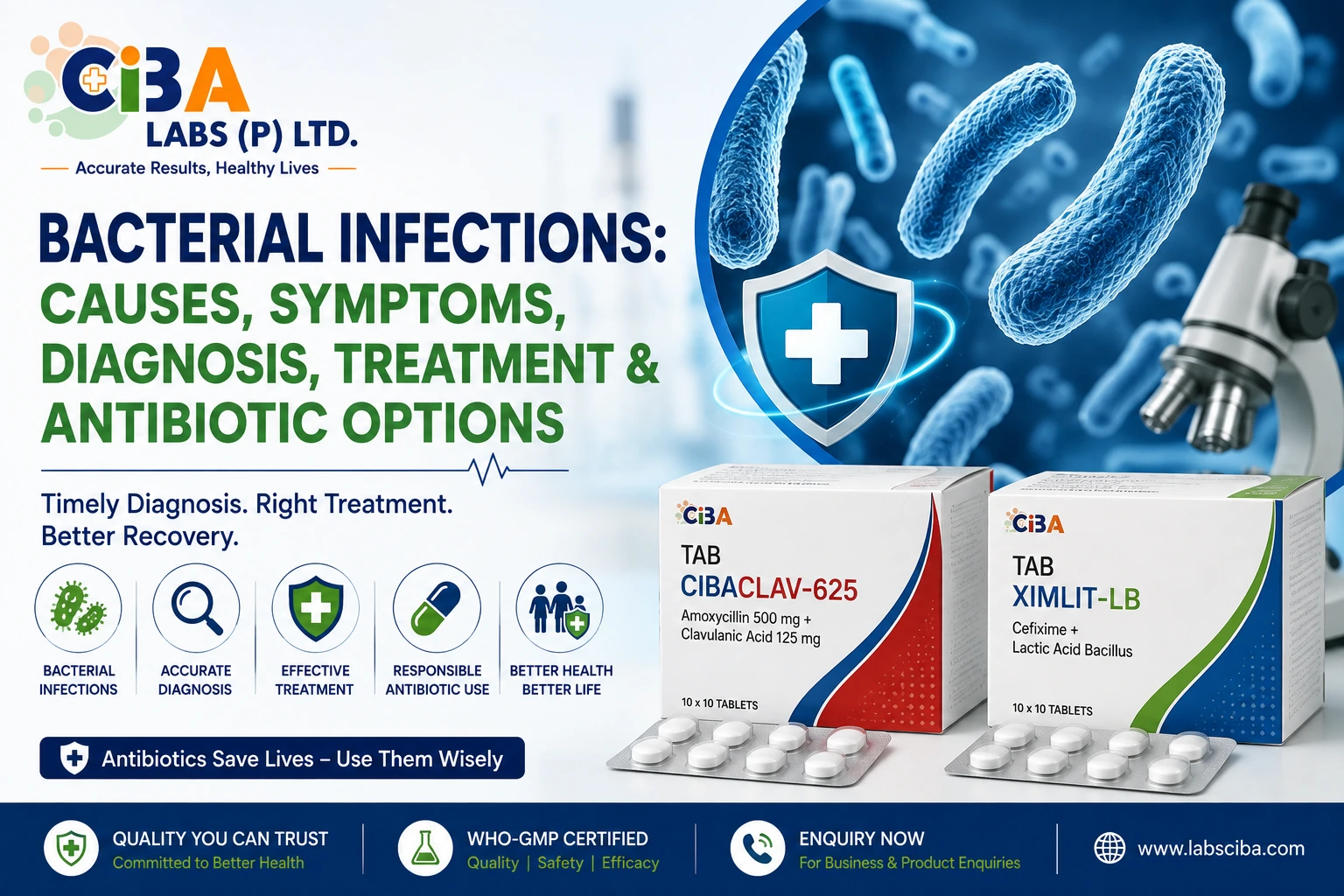
Two products relevant to this topic are TAB CIBACLAV-625 and TAB XIMLIT-LB.
TAB CIBACLAV-625
Composition: Amoxycillin 500 mg + Clavulanic Acid 125 mg
Pack Size: 10 x 10
CIBACLAV-625 contains amoxycillin, a penicillin-type antibacterial, together with clavulanic acid. The combination is designed to provide antibacterial activity while clavulanic acid helps inhibit certain beta-lactamase enzymes produced by susceptible bacteria.
The product may be considered by a qualified healthcare professional for appropriate susceptible bacterial infections when this combination is clinically suitable.
Important: CIBACLAV-625 should not be used for viral infections. Patients with a history of serious allergy to penicillin or other beta-lactam antibiotics should inform their healthcare professional before treatment.
TAB XIMLIT-LB
Composition: Cefixime + Lactic Acid Bacillus
Pack Size: 10 x 10
XIMLIT-LB contains cefixime, a cephalosporin antibiotic, together with lactic acid bacillus.
Cefixime may be prescribed for selected bacterial infections caused by susceptible organisms. The choice of cefixime should be based on professional assessment and the suspected or confirmed infection.
The product should be taken only according to the healthcare professional's instructions. Patients should disclose relevant allergies, previous antibiotic reactions, and other medicines they are taking.
Why Antibiotic Choice Matters
Different antibiotics work against different groups of bacteria, and bacteria can develop resistance. Therefore, choosing an antibiotic is a clinical decision rather than simply selecting the strongest medicine.
Healthcare professionals may consider:
- The site of infection.
- The suspected or confirmed bacterial organism.
- Local antibiotic resistance patterns.
- Severity of the infection.
- Patient age and health status.
- Kidney or liver function when relevant.
- Drug allergies.
- Other medicines and potential interactions.
- Previous antibiotic use.
How to Take Antibiotics Responsibly
- Take the medicine exactly as prescribed.
- Use the prescribed dose and schedule.
- Do not share antibiotics with family members or friends.
- Do not use an old prescription for a new illness.
- Tell your doctor about allergies and previous medicine reactions.
- Tell your healthcare professional about other medicines and supplements.
- Ask what to do if you miss a dose.
- Seek advice if symptoms worsen or do not improve as expected.
How Can Bacterial Infections Be Prevented?
Many infections can be reduced by practical hygiene and health measures, although prevention depends on the specific infection.
- Wash hands regularly with soap and water.
- Practice safe food handling and preparation.
- Drink safe water.
- Keep wounds clean and appropriately covered.
- Avoid sharing personal items when infection risk is present.
- Follow recommended vaccination guidance where vaccines are available.
- Stay home and follow medical advice when contagious illness requires it.
- Use antibiotics responsibly when they are prescribed.
When Should You See a Doctor?
Seek medical advice if symptoms are persistent, severe, worsening, or unusual. Medical evaluation is especially important when you have:
- Persistent or high fever.
- Difficulty breathing.
- Severe or worsening pain.
- Confusion or marked weakness.
- A rapidly spreading skin infection.
- Signs of dehydration.
- Persistent vomiting or diarrhea.
- Symptoms in a person with significant underlying illness or reduced immunity.
Seek Urgent Medical Care If You Have
- Severe difficulty breathing.
- Confusion, collapse, or inability to stay awake.
- Signs of severe dehydration.
- Rapidly worsening illness.
- Severe allergic symptoms after taking a medicine, such as difficulty breathing or swelling of the face, lips, tongue, or throat.
- Other symptoms that a healthcare professional has identified as an emergency.
Frequently Asked Questions
Do antibiotics treat viral infections?
No. Antibiotics are used for certain bacterial infections and do not treat viral illnesses such as colds and influenza. citeturn0search12
Can I take antibiotics for a common cold?
Antibiotics are not used to treat viral colds. If symptoms are severe, persistent, or unusual, consult a healthcare professional.
What is antibiotic resistance?
It is the ability of bacteria to survive antibiotics that were designed to kill them or stop their growth. Resistant infections can be harder to treat. citeturn0search15
Is CIBACLAV-625 suitable for every bacterial infection?
No. Antibiotic choice depends on the infection, the suspected organism, patient factors, allergies, resistance considerations, and professional judgment.
What is XIMLIT-LB used for?
XIMLIT-LB contains cefixime with lactic acid bacillus. Cefixime is an antibiotic used for selected susceptible bacterial infections under professional guidance.
Can antibiotics cause side effects?
Yes. Antibiotics can cause side effects including gastrointestinal symptoms, rash, dizziness, and other reactions. Serious reactions can occur and require prompt medical attention. citeturn0search12
Should I stop an antibiotic when I feel better?
Follow the prescribing healthcare professional's instructions. Do not change, stop, or extend treatment without appropriate medical advice.
Why Choose CIBA Labs?
CIBA Labs is committed to supporting healthcare through a quality-focused pharmaceutical portfolio and responsible product information.
Our approach includes:
- A diverse pharmaceutical product portfolio.
- Quality-focused manufacturing practices.
- Attention to product consistency and quality assurance.
- Commitment to healthcare professionals and business partners.
- A focus on responsible pharmaceutical solutions.
Conclusion
Bacterial infections can range from mild illnesses to serious conditions requiring prompt medical care. Understanding the difference between bacterial and viral infections is important because antibiotics work against certain bacteria but do not treat viruses.
Appropriate diagnosis, responsible antibiotic use, and adherence to professional treatment advice can help improve outcomes and reduce the risk of antibiotic resistance.
CIBA Labs offers antibiotic products such as TAB CIBACLAV-625 (Amoxycillin 500 mg + Clavulanic Acid 125 mg) and TAB XIMLIT-LB (Cefixime + Lactic Acid Bacillus) within its pharmaceutical portfolio. These products should be used only when clinically appropriate and according to current approved product information and qualified healthcare professional guidance.
Call to Action
Explore the CIBA Labs product portfolio to learn more about our pharmaceutical solutions.
For product-related information or business enquiries, visit the relevant product page or contact the CIBA Labs team.
Medical and Product Information Disclaimer: This article is intended for general educational and product-information purposes only. It is not a substitute for professional medical advice, diagnosis, treatment instructions, prescribing information, or official product literature. Product composition and pack information in this article are based on the product details provided for this draft. Always refer to current approved product information and consult a qualified healthcare professional before using any medicine.